How to Add EV Charger Installation Service to Your Electrical Business — Before the 30C Sunset (2026 Guide)
Honest playbook for established electrical contractors ready to capture the EV charger install market — but the federal 30% tax credit (Section 30C) terminates June 30, 2026 under OBBBA. That's 57 days from this publication date. The credit was the closing tool for residential installs; what replaces it after is state rebates, TOU savings, and manufacturer warranties. Plus the NEC 2023 Article 625 changes (125% continuous load, GFCI on cord-and-plug) that distinguish code-compliant installers from the underpaid weekend warriors.
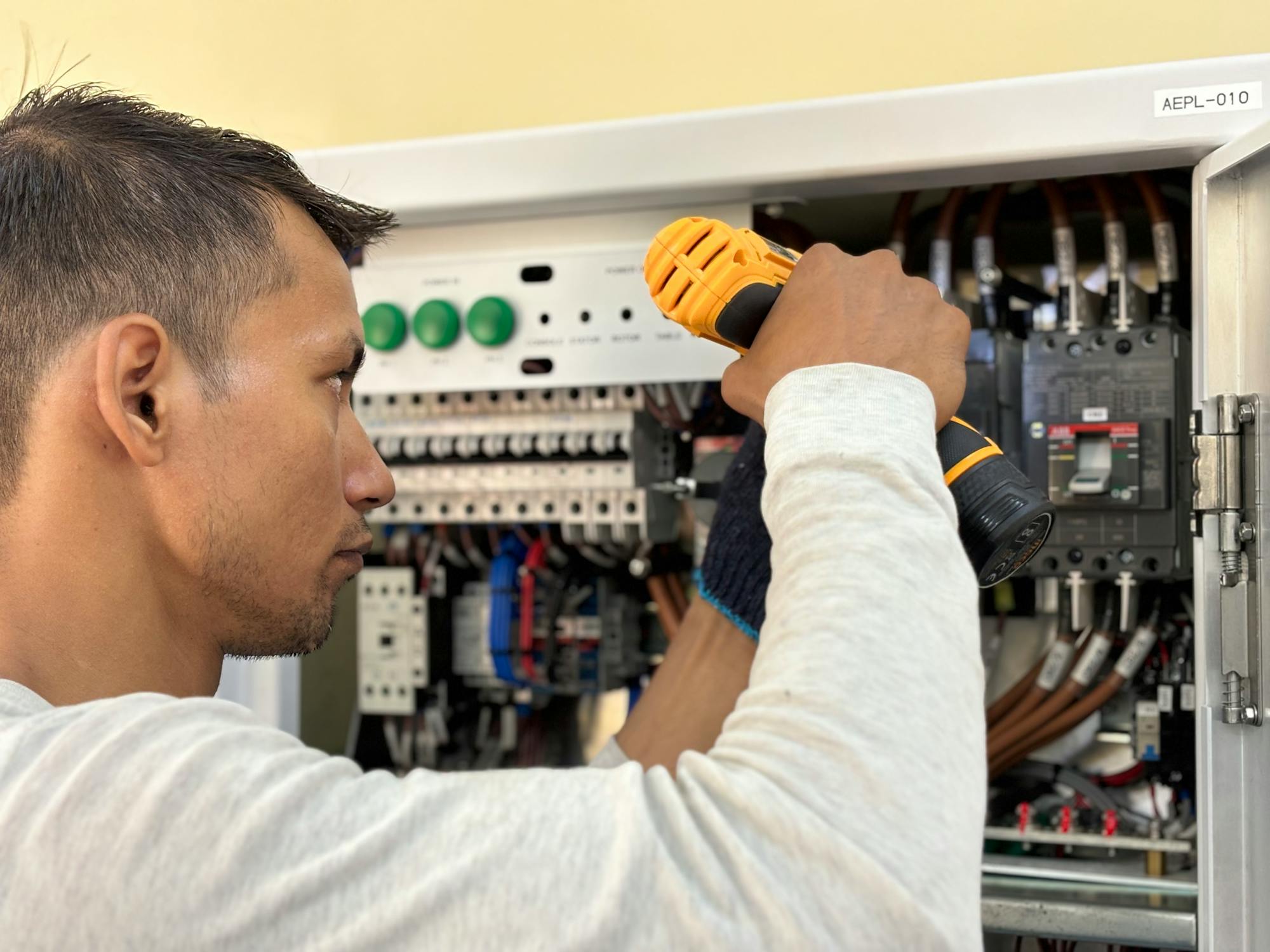
**This guide leads with the urgency because it's real.** Section 30C of the Internal Revenue Code (Alternative Fuel Vehicle Refueling Property Credit) was set to run through 2032 under the IRA. The One Big Beautiful Bill Act, signed July 4, 2025, accelerated the sunset to **property placed in service on or before June 30, 2026**. Residential customers can claim **30% of cost up to $1,000 per charger**. Commercial properties can claim **6% up to $100,000 per item, or 30% up to $100,000 if prevailing wage and apprenticeship requirements are met**. After June 30, 2026, the credit is dead under current law. (IRS PL 119-21 FAQ, IRS 30C credit page)
Every customer who has been considering an EV charger install for the past 18 months has a hard deadline now. **Permits pulled but install incomplete = no credit.** Property must be placed in service (energized + operational) on or before June 30, 2026 to qualify. For an electrical contractor reading this on May 4, 2026 — that's 57 calendar days. The next 8 weeks are the most concentrated EV charger install rush of the decade.
And the eligible-census-tract requirement is the gotcha most contractors don't catch. Property must be in **either a low-income community (median family income ≤80% of statewide/MSA median per Section 45D NMTC rules) OR a non-urban census tract (≥10% of census blocks not designated urban in the 2020 Census)**. Roughly two-thirds of US census tracts qualify, but the third that doesn't — affluent suburban tracts in major metros — is exactly where EV adoption is highest. **Use the DOE/Argonne 30C eligibility mapper before you quote the credit to a customer**. Quoting a $1,000 credit and then having the IRS deny it is how you lose customers and reviews.
This guide is for the established electrical contractor (1-3 person shop, $200K-$500K revenue) ready to add EV chargers as a specialty service. We'll cover the 30C scramble, what to do after June 30, NEC 2023 Article 625 code requirements, EVITP certification, install pricing, the manufacturer dealer ecosystem (Tesla / ChargePoint / Wallbox / Qmerit), state rebate programs that survive the federal sunset, and the operational gotchas that separate compliant installers from red-tagged weekend warriors. Sources: IRS PL 119-21 FAQ + Form 8911 instructions, DOE AFDC, FHWA NEVI guidance, BLS, IBISWorld 2026, EVITP, NEC 2023 Article 625, Argonne National Lab EV sales data, manufacturer retail pricing pages, and state rebate program documentation. Items where data isn't publicly disclosed flagged [unverified].
1. The 30C clock — what to do in the next 57 days
The federal credit terms (verified 2026)
| **Residential** (taxpayer's principal residence) | **30% of cost up to $1,000 per charging port** (IRS 30C) |
| **Commercial / business (base)** | **6% of cost up to $100,000 per item** |
| **Commercial with PWA** (prevailing wage + apprenticeship) | **30% of cost up to $100,000 per item** |
| Eligible time window | Property placed in service **Jan 1, 2023 → June 30, 2026** (per OBBBA) |
| Eligible census tract requirement | Low-income community (≤80% MFI per §45D NMTC) **OR** non-urban tract (≥10% non-urban census blocks per 2020 Census) |
| IRS form | **Form 8911** for both residential and business filers |
| Stacking | Combines with state rebates + utility rebates + manufacturer instant rebates without offset |
| After June 30, 2026 | **Credit dies.** No transition period, no phase-down. Property placed in service July 1+ gets zero federal credit |
Every quote sent in May or June 2026 should include the 30C deadline visibly. "Install completed by June 30, 2026 → $1,000 federal tax credit. Install completed July 1, 2026+ → no federal credit available." That's a $1,000 close-the-deal lever you have for 8 weeks. After that, the residential pitch shifts to state/utility rebates (Section 8) + manufacturer warranties + TOU charging savings ($400-$800/yr typical). Plyrium's quote builder lets you template this language across every quote — set it once, applied to every quote sent through June 30.
How to verify census-tract eligibility before quoting
- **Open the DOE Argonne National Lab 30C eligibility mapper.** Enter the customer's installation address.
- **Check the result.** Green = eligible (claim the credit on Form 8911). Red = ineligible (don't quote the credit; the customer cannot claim it).
- **Document the result in the customer record.** Plyrium customer assets / equipment tracking captures this — set a notes field "30C eligible: yes/no, mapper checked YYYY-MM-DD." Protects you from later customer disputes when the credit doesn't materialize on their tax return.
- **For ineligible properties**, the pitch pivots to state/utility rebates + utility-managed charging programs + TOU rate savings. Don't undersell the install — the install is still profitable; just don't promise a credit they can't claim.
2. The market reality — 27% CAGR even post-credit
Beyond the 30C window, the underlying EV charging market is one of the fastest-growing in the construction trades. Key data points:
- **US residential EV charging market**: $9.68B in 2025, projected **$32.12B by 2030 at 27.11% CAGR** (Mordor Intelligence)
- **Level 2 share of residential**: 67.56% of 2024 residential charging revenue (the dominant install category)
- **US EV charging infrastructure CAGR 2026-2033**: ~25.7% (Grand View Research)
- **Q1 2026 BEV market share**: 6.3% of new light-duty sales (down 1.4 pts YoY post-30D credit expiration). PEVs (BEV+PHEV) = 7.47% in March 2026 (Argonne National Lab monthly EV sales)
- **Q1 2026 PEV sales volume**: 271,673 cumulative through March 2026; March 2026 alone = 104,847 plug-ins (down 33.7% YoY post-30D credit)
- **Long-term US EV trajectory**: 30-40% of new sales projected by 2030 (Recharged industry analysis)
- **California 2026 mandate**: All new dwellings must include EV-ready circuits — drives baseline retrofit + new-build installation demand independent of EV adoption rate
Translation: even with 30D (vehicle credit) gone since Sept 30, 2025, and 30C (charger credit) dying June 30, 2026, the underlying install market grows at 25-27% CAGR through 2030. The next 57 days are the federal-credit rush; the next 7 years are the install-volume tailwind. **A contractor who establishes the EV specialty in 2026 owns a fast-growing book through 2030+.**
BLS electrician outlook (the labor reality)
- **Employment growth 2024-2034**: **+9% (much faster than average)** (BLS Electricians OOH)
- **~81,000 openings/year average over the decade**
- **Median pay May 2024**: $62,350/yr ($30/hr). 10th percentile $39,430; 90th percentile $106,030
- **Drivers cited by BLS**: AI/data centers, EVs, electrification (general)
- **Industry size 2026 (IBISWorld)**: ~262,000 electrical contractor businesses, **$347.5B revenue** (IBISWorld Electricians US)
- **Industry net margin baseline**: ~10% for electrical contractors generally; specialty work (panels, generators, EV chargers) typically commands 15-25% material markup (HouseCallPro electrical pricing)
3. Charger types + tech — what to install + what's premium
Charger levels (verified specs)
| **Level 1 (120V, ~1.4 kW)** | Standard wall outlet. 3-5 mi range/hr. **No install opportunity** — customer just plugs into existing outlet. |
| **Level 2 (240V, 7.2-19.2 kW)** | 240V single-phase. **25-40 mi range/hr.** The residential install market. 32A / 40A / 48A continuous output most common. |
| **DC Fast / Level 3 (400-1,000V, 50-350 kW)** | Commercial only. Requires 3-phase service. 50-60 kW = $30K-$50K hardware + install; 350+ kW = $100K-$175K hardware + install. **Total installed $18K to $350K+ per port** (AnengJi commercial install breakdown). |
Connector standards — NACS won, CCS lost
- **NACS (SAE J3400, formerly Tesla connector)**: **48.2% of US DC fast-charging connectors as of January 2026** (EV Charging Stations market data)
- **CCS1**: ~40% of US connectors, declining
- **CHAdeMO**: <8,900 connectors total, effectively legacy
- **Industry tipping point**: Stellantis was the last major automaker to adopt NACS (Nov 2025), making NACS effectively universal for new US BEVs from MY 2025+ (Electrek)
- **SAE J3400/2 (May 2025)**: defines NACS up to 1,000V, future-proofing the standard for next-gen high-voltage DC fast charging
- **Practical implication**: residential L2 chargers in 2026 are typically dual-connector (J1772 + NACS adapter or NACS-native). Tesla Wall Connector Universal ($599) ships with both connectors built in
Hardwired vs plug-in (NEMA 14-50) — the 20% performance gap
| **Plug-in NEMA 14-50** | **50A breaker, 8 AWG copper, 40A continuous max** (80% rule). Faster install, customer can take charger when moving. |
| **Hardwired** | Typically **60A breaker, 6 AWG copper, 48A continuous** = ~20% faster charging. Required for permanent installs, manufacturer warranty often requires hardwiring above 40A. |
| **Receptacle quality matters** | Standard kitchen-grade NEMA 14-50 receptacles **frequently melt under sustained EV load**. Industrial-grade Hubbell or Bryant required for plug-in installs (Qmerit on NEMA 14-50) |
| **GFCI requirement (NEC 2023 625.54)** | Cord-and-plug receptacle = **GFCI required**. Hardwired = GFCI not required by NEC unless manufacturer/AHJ specifies. **Double GFCI (breaker + EVSE internal) causes nuisance trips** |
Major residential charger retail pricing (2026 verified)
| **Tesla Wall Connector Gen 3** (J1772) | **~$475** (NuWatt Tesla pricing) |
| **Tesla Wall Connector Universal** (NACS+J1772) | **~$599** |
| **ChargePoint Home Flex** | **~$699** (NuWatt comparison) |
| **Wallbox Pulsar Plus 40/48A** | **~$649** |
| **Grizzl-E Classic** | **~$399** (CheapEVCharger) |
| **Emporia 48A** | **~$399-$499** |
| Wholesale | Typically 15-25% below retail through manufacturer dealer programs |
4. NEC 2023 Article 625 — the code requirements that distinguish pros
Every state in the US adopts the NEC on a 3-year cycle (some on 2024 NEC, most on 2023 NEC, a few still on 2020). Article 625 covers EV charging system installations specifically. The four sections below are the ones that fail inspections most often.
625.42 — Continuous load, 125% multiplier
- **EVSE is treated as a continuous load.** Branch circuit/feeder must be sized at **125% of EVSE rated output** (NEC 2023 / Mike Holt Article 625).
- **40A EVSE → 50A breaker** (40 × 1.25 = 50)
- **48A EVSE → 60A breaker** (48 × 1.25 = 60)
- **Common failure mode**: contractor installs a 48A hardwired EVSE on a 50A breaker. **Code violation, fails inspection, gets red-tagged.**
- **EVEMS exception (625.42(A)/(B))**: EV Energy Management Systems (smart chargers that throttle output based on home load) can size differently with proper EVEMS controls — useful for avoiding panel/service upgrades on tight services
625.54 — GFCI on cord-and-plug installs
- **ALL cord-and-plug EVSE receptacles require GFCI** (ECMag NEC EV requirements)
- **NEMA 14-50 install = GFCI breaker required**
- **Hardwired = GFCI not required by NEC** (unless manufacturer or AHJ specifies)
- **The double GFCI trap**: GFCI breaker + EVSE internal GFCI = nuisance trips. Solution: hardwired install + standard breaker (allowed); OR remove one GFCI layer if both code-acceptable
625.44 — GFCI for receptacle ≤150V to ground
Specific GFCI rule for receptacle/EVSE installations operating at ≤150V to ground. Important for split-phase 240V installs where the to-ground voltage is 120V. Hardwired vs receptacle distinction matters for compliance. (ECMag NEC EV equipment)
220.83 — Optional load calc for adding to existing service
- **Method for adding loads (like an EVSE) to an existing dwelling without service upgrade.** Critical for the panel-upgrade-or-not decision.
- **EV calculated at the larger of 7,200 VA or nameplate; then × 125%**
- **Decision rule**: if (new load + existing calc'd load) ≤ service rating → no service upgrade required
- **Example**: 200A service = 48,000 VA. Existing calc'd load 32,000 VA. New 48A EVSE = max(7,200, 11,520) × 1.25 = 14,400 VA. Total = 46,400 VA → fits within 200A service, no upgrade needed.
- **Document the calc on the permit application**. Inspectors look for it. (Kopperfield 220.83 guide)
NEC 2026 update — Article 625 changes coming
- **625.48 (NEC 2026)**: EVEMS may exempt certain installs from the 125% multiplier in single-family with qualifying home energy management (SparkShift NEC 2026 changes)
- **Practical implication**: as states adopt NEC 2026 (rolling adoption through 2027-2028), the smart-charger / load-management install path becomes meaningfully easier. Charger manufacturers (Wallbox, ChargePoint) are positioning for this shift now
5. Permits + EVITP certification + manufacturer credentials
Permit + inspection costs (verified 2026)
- **Permit cost residential**: $50-$200 typical (electrician usually pulls); $300-$600+ if panel upgrade involved (CostToCharge permit cost by state)
- **Permit timeline residential**: 1-4 weeks typical
- **Permit timeline commercial**: 8-10+ weeks, sometimes longer for utility coordination
- **Inspection requirements**: rough-in (panel + circuit work) + final (charger energized + tested). Some jurisdictions require thermal imaging proof of lug torque
- **Pass-through to customer** as line item on quote, never absorb. Customer expects it
EVITP certification — the NEVI requirement
| **Cost** | **$275** for online course + proctored exam (EVITP) |
| **Time** | ~20 hours self-paced study + proctored online exam |
| **Validity** | **3 years**, then re-certification required |
| **Eligibility** | State-licensed/certified electrician OR 8,000 hours documented hands-on experience |
| **NEVI requirement** | **MANDATORY** for any electrician installing/operating/maintaining EVSE on NEVI-funded projects (Federal Register NEVI Standards) |
| **Crew requirement** | On crews >1 electrician, at least one must be in a registered apprenticeship program |
$275 + 20 hours of study is the cheapest credential in the industry. For NEVI work it's mandatory. For commercial installs, customers' RFPs increasingly require it. For residential installs through manufacturer dealer programs (Tesla / ChargePoint), having EVITP-certified installers boosts your listing. The break-even on the cert is typically 1-2 commercial installs.
Manufacturer dealer programs
- **Qmerit network** — Tesla's recommended home-charging installation partner. Joining the Qmerit network is a high-leverage referral channel for home charger installs from Tesla buyers. Qmerit
- **Tesla Certified Installer** — Tesla recommends only Certified Installers for Wall Connector + Powerwall 3. **Required for warranty compliance** and Tesla.com referral listings (Tesla Certified Installers)
- **ChargePoint installer certification** — required to be listed on ChargePoint's installer locator. Best practices, system integration, maintenance training
- **Wallbox / EVBox / ABB / Pod Point** — vendor-specific certs available, generally lighter requirements than Tesla. Useful if customer specifies a brand
- **GM Dealer Community Charging Program** — GM is distributing chargers to up to 40,000 dealer-area sites (GM Dealer EV Charging)
- **Ford Power Promise / Pro Charging** — Ford dealer-driven referrals to certified installers
Other certifications worth considering
- **NABCEP** — for solar + battery + EV charger combo work. Higher upfront investment but unlocks the bundled-install premium pricing tier
- **OSHA 10 / OSHA 30** — baseline jobsite safety. OSHA 30 expected on commercial sites
- **State journeyman / master electrician license** — required everywhere for the actual electrical work; the EV-specific certs sit on top of the underlying state license
6. Pricing — residential + panel upgrade + commercial
Residential install pricing (verified 2026)
| **Total installed (typical)** | **$1,200-$3,000** before incentives. Simple jobs <$1,500; complex (panel upgrade + long wire run) $4,000+ |
| **2025 nationwide installation average** | **~$2,100** (Recharged 2026 install cost data) |
| **Charger hardware** | $400-$700 typical residential (see Section 3 for retail) |
| **Electrician labor (simple)** | $400-$1,200 |
| **Permit + inspection** | $50-$300; $300-$600+ if panel work involved |
| **Outdoor / weatherproofed install adder** | $200-$1,000 (extra conduit + weatherproof box + GFCI receptacle if outdoor) |
| **Median cost when panel upgrade required** | **$2,744** (Treehouse install cost research) |
Panel upgrade pricing (the second-revenue lever)
- **100A → 200A panel upgrade**: $1,500-$4,000 typical; $2,000-$3,000 most common; $4,500+ in dense metros (HomeGuide panel replacement cost)
- **200A → 400A service upgrade**: adds $11,100-$16,200 minimum (Colorado benchmark) (UniColorado panel upgrade)
- **Why this matters**: ~30% of EV charger install quotes require panel work. A contractor who can quote both the EV charger AND the panel upgrade as one job captures a 2-3x larger ticket than the charger-only contractor
- **The panel upgrade is the upsell**: "Your service is at 87% capacity today. Adding a 48A continuous EV load pushes it to 94%, meaning you'll trip your main breaker on summer afternoons. We recommend the 200A service upgrade with the EV install for a total of $X."
Labor rates
- **BLS median May 2024**: **$30/hr ($62,350/yr)**. Top decile >$106,030/yr (BLS Electricians OOH)
- **Contractor billed labor**: $50-$100/hr typical; master $75-$120/hr; journeyman $50-$80/hr (HouseCallPro electrical pricing)
- **Industry net margin**: ~10% electrical contractor average
- **Specialty markup (chargers + panels)**: 15-25% on materials
Commercial install pricing
| **Level 2 commercial (per port)** | **$3,500-$15,000 installed** typical. Charger $3K-$10K + labor $400-$1,500 + panel work $500-$2,500 + trenching $500-$2,000+ (Qmerit commercial install factors) |
| **DC Fast Charger 50-60 kW (per port hardware)** | $30K-$50K |
| **DC Fast Charger 120-180 kW (per port hardware)** | $65K-$90K |
| **DC Fast Charger 350+ kW (per port hardware)** | $100K-$175K |
| **DC Fast Charger total installed (per port)** | **$18,000 to $350,000+ per port**, typical $40K-$150K (AnengJi DCFC breakdown) |
| **Network fees ongoing** | $300-$800/port/year (CMS subscription, OCPP backend) |
| **Typical project timeline** | 10-12 weeks (assess → engineer → permit → procure → install → final) |
| **NEVI award cap** | Up to **$100,000 per public DC fast-charging port** meeting standards |
7. The proposal-and-financing problem (and the Plyrium fit)
EV charger installs are a high-value visual sale. The customer is already excited (they bought an EV). They want to see options + financing + timeline + the 30C credit math. A printed quote on a clipboard or a Word doc emailed after the visit is how you lose to the competitor who showed up with a clean digital proposal on an iPad.
Plyrium handles this end-to-end. Specifically built for the install-business operations:
- **Multi-tier proposal builder (Good / Better / Best)** — perfect for the EV install structure: **Good** ($1,200-$1,800: 32A plug-in NEMA 14-50, basic charger), **Better** ($2,000-$2,800: 48A hardwired, smart Wi-Fi charger, load management), **Best** ($3,500-$7,000+: 48A hardwired + load management + panel upgrade + solar/battery integration). `quotes.proposal_tiers` JSONB renders a tier-picker on the public quote page; customer picks one, that tier's items materialize into the locked invoice on accept. **Industry data: 4+ option proposals lift close rate from 42% to 52%** — that's $50K-$100K incremental revenue on a 100-quote year
- **Optional add-on lines** (`line_items.is_optional`) — customer ticks add-ons on the public quote page: "Add a NEMA 14-50 industrial-grade receptacle? +$80. Add outdoor weatherproofing? +$200. Add a smart load management module? +$350." Selection drives which optionals materialize
- **BYO Financing URL pattern** — Wisetack (loans up to $25K, ~80% approval), GreenSky (up to $100K, Goldman Sachs-backed), Synchrony (standalone public co.), Service Finance (HVAC/roofing/windows/electrical specialist). Renders "Pay over time — From $79/mo for 60 months" CTA on quotes above min amount. Critical for the panel-upgrade + EV-charger combo that runs $4K-$8K. **No competitor in the comparison exposes this** — Jobber/HCP/ServiceTitan all want you on their financing partner
- **Customer assets / equipment tracking** (`customer_equipment` table) — install date + brand + model + serial + warranty until + installed-by-us flag. **Critical for Tesla Wall Connector + ChargePoint Home Flex warranty registration** + manufacturer cert program reporting. Set a Plyrium maintenance reminder rule for install_date + 14 days to send a registration-deadline ping
- **30C eligibility tracking** — capture the Argonne mapper result on the customer record. "30C eligible: yes/no, mapper checked YYYY-MM-DD" as a notes field. Protects you from later customer disputes when a credit doesn't materialize
- **Save card on file via SMS or email link** — for deposit collection on accept; off-session charge balance at install completion. SCA/3DS step-up handled. Stripe Connect with 0% Plyrium platform fee (HCP / Jobber Payments take their own ~2.9% on top of base Stripe processing; Plyrium takes 0)
- **AI voice receptionist with service-area gating** — for the 30C scramble: incoming "can you install my Tesla charger before June?" calls happen at all hours. Service-area haversine gate routes out-of-area callers gracefully; in-area callers get the calendar with smart-slot ranking by minimum drive time
- **Native Google Business Profile management** — auto-publishes posts (4-8/mo by tier), AI replies to reviews, sends post-install review requests with smart-routing. **Critical for Tesla Certified Installer + Qmerit referral SEO ranking**. Tesla / Qmerit weight Google reviews heavily in their installer-locator algorithm
- **Memberships / Care Club** — annual EV charger inspection plans ($125-$200/yr per customer). Inspect breaker connections, lug torque, GFCI function, charger firmware version. Recurring revenue tail attached to every install
- **Pipeline kanban for the 30C rush** — drag-to-reassign incoming leads through New / Drafted / Needs your call / Replied / Resolved. Spring + early summer 2026 lead volume can 3-5x normal; the kanban keeps it organized
The 30C window closes June 30, 2026. Plyrium gets your proposals + 30C eligibility checks + warranty tracking on one bill
Voice ($149/mo, AI receptionist + multi-tier proposals + CRM + quotes + invoices + BYO Financing), Visibility ($399/mo, full GBP management + AI review responses + 4 GBP posts/mo), Bundle ($699/mo, everything + recurring contracts + customer equipment tracking + memberships + maintenance reminder rules + multi-tech scheduling), Front Office ($1,199/mo, Bundle + Voice + 8 GBP posts + 2 SEO blogs + quarterly strategy call). $0 setup, no contract, 14-day trial. Set up the wizard in under 30 minutes; templates ready for your first 30C-window quote today.
Start the 14-day trial8. State + utility rebates (the post-30C pivot)
After June 30, 2026, the federal credit is gone. State + utility rebates become the primary closing tool. **The good news: many state programs are well-funded through 2026 and beyond, often more generous than 30C ever was.**
California
- **PG&E Residential Charging Solutions**: 50%-100% of approved equipment costs (PG&E rebate)
- **PG&E / SCE / SDG&E Pre-Owned EV Rebate**: $1,000 standard / **$4,000 income-qualified** (PG&E EV rebates)
- **WeaveGrid ChargePerks** (PG&E / SCE / SDG&E / SMUD / LADWP): up to **$700/yr in charging savings** via managed charging programs
New York
- **NYSERDA Charge Ready NY 2.0**: **$3,000/port** for workplaces / multifamily / hotels; **+$1,000/port in Disadvantaged Communities**; reserved/fleet spots get $1,000/port. Total program budget bumped to $28M (Feb 2026 added $15M) (NYSERDA Charge Ready NY, Swtch summary)
- **Stacks well with state utility rebates** (Con Edison, National Grid)
Massachusetts
- **Eversource**: up to $700 charger purchase rebate; **+$300 in Environmental Justice communities**
- **Unitil**: up to $700 install costs; **up to $1,700 for income-qualified R2 customers**
- **National Grid MA**: wiring upgrade rebates + off-peak charging programs
- **MOR-EV** (vehicle, not charger): $3,500 standard; +$1,500 income; +$1,000 trade-in (MassCEC)
Colorado
- **Xcel Energy residential**: **up to $1,300** for home wiring related to L2 install
- **Xcel commercial / multifamily**: **$7,085-$14,170/port L2; $45,000-$130,000/port L3 publicly accessible**
- **Charge Ahead Colorado**: up to 80% of total cost for public DCFC
- **Holy Cross Energy**: up to $549; **Gunnison County EA**: 50% up to $1,250 (EVPlugPros CO incentives)
Washington / Oregon
- **Seattle City Light**: 50% up to $25K (L2) or $50K/port (L3)
- **Tacoma Power**: $5,000/port up to $50K total project (GoEVDaily state-by-state guide)
- **ODOT (launched 2025)**: **$8,000/port up to 80% project cost** for multifamily / workplace / public
- **Lane Electric** $500; **Columbia River PUD** $1,000 commercial; **Douglas EC** up to $6,000 commercial (Go Electric Oregon)
NEVI federal program (commercial DC fast charging)
- **$5B total FY22-FY26**; **$885M apportioned for FY26** (FHWA)
- **At least 384 NEVI ports built** as of late 2025
- **Federal court ruled Jan 30, 2026** that USDOT's 2025 freeze of NEVI was illegal — funds restored
- **NEVI now allows medium/heavy-duty + station upgrades + sites beyond highway corridors** (AFDC NEVI, Eno Center NEVI updates, FHWA Interim Final Guidance 8/11/2025)
- **Award cap**: up to $100,000 per public DC fast-charging port meeting standards
9. Marketing — Qmerit, dealerships, multifamily
Google Ads CPC + lead funnel (2026 verified)
- **Google Ads cross-industry search avg Q1 2026**: **$2.96** (up 12% YoY)
- **Consumer services category**: **$6.40 average CPC** (closest proxy for "EV charger installer near me") (Get-Ryze 2026 benchmarks)
- **Major metros pay 50-80% more** vs suburbs
- **EV-specific CPC**: [unverified — no published EV charger installer-specific benchmark; budget via consumer services proxy]
Manufacturer / dealership channels (the highest-leverage)
- **Qmerit network** — Tesla's recommended home charging installation partner. Direct lead flow to Qmerit installers. **Joining is high-leverage** (Qmerit)
- **Tesla Certified Installer locator** — Tesla.com listing. Required for Wall Connector warranty + Powerwall 3 installs
- **GM Dealer Community Charging Program** — GM is distributing chargers to up to **40,000 dealer-area sites** (GM Dealer EV Charging)
- **Ford Power Promise / Pro Charging** — Ford dealer-driven referrals. New Ford EV buyers get a recommended-installer list
- **Build dealer relationships in your service area**. The 30-day post-purchase window is the install opportunity — most EV buyers want a charger installed within 30 days of taking delivery
HOA / property manager outreach
- **California 2026 mandate**: All new dwellings must include EV-ready circuits — drives baseline retrofit + new-build installation demand
- **Multifamily retrofit market**: existing apartment buildings facing tenant demand for EV charging. NYSERDA Charge Ready NY 2.0 specifically targets multifamily with $3K-$4K/port
- **HOA dynamics**: many HOAs require board approval for unit-level charger installs. Build relationships with HOA board members + property management companies. Single multifamily install = 10-50 ports vs 1 port for a residential
Solar partnerships (the bundled play)
- **Solar + battery + EV charger** is the highest-margin install combo in residential electrical work
- **Typical bundled ticket**: $40K-$80K total ($25K-$50K solar, $10K-$20K battery, $2K-$4K EV charger)
- **Solar contractors actively look for electrical partners** for the EV charger portion. Many solar shops don't carry electrician licensing for residential charger work
- **The 30C eligibility check matters here too** — solar customers in eligible census tracts get the 30% / $1K credit on the EV charger portion AS WELL AS solar incentives. Stack matters
10. The 90-day path — from no EV work to first 30C-window install
This 90-day path is structured for the realistic case where most steps must happen in parallel. Sequence them aggressively if 30C capture matters; sequence them normally if you're building for the post-30C state-rebate market.
| Track | Days 1-14 | Days 15-30 | Days 31-90 |
|---|---|---|---|
| **Certification** | Enroll in EVITP ($275). Start the 20-hour course | Take EVITP exam. Schedule Tesla Certified Installer training if not already certified | Apply to Qmerit network. Apply to ChargePoint installer locator. Tesla Certified Installer status reflected in Tesla.com locator |
| **Equipment + supply** | Open accounts with Solis or local distributor for Tesla / ChargePoint / Wallbox wholesale. Stock 2-3 chargers + breakers + GFCI breakers | Practice install on owner's home or a friend's home. Document with photos for marketing | Build standard kit: charger + breaker + 6 AWG copper + Hubbell industrial NEMA 14-50 + GFCI breaker. Stock for 5-10 jobs |
| **Sales + marketing** | Set up Plyrium account. Build 3-tier quote template (Good/Better/Best). Wire BYO Financing partner | Start outreach to local Tesla / Ford / GM dealerships. Qmerit profile complete | Run Google Ads on "EV charger installer [city]". Build GBP profile with EV-specific photos. Outreach to 5+ multifamily property managers |
| **First installs** | Quote 5-10 existing customers (any client with a recent EV purchase indicator). Book 2-3 first installs aggressively before June 30 | Run first installs. Pull permits properly. Inspect, register manufacturer warranty, capture 30C eligibility on customer record | After June 30: pivot pitch to state rebates + TOU + warranties. Continue volume growth |
Year 1 EV install business expectations
- **Year 1 (with 30C window)**: 30-60 residential installs at $2,100 average = **$63K-$126K incremental revenue**. ~10 panel-upgrade combo jobs at $4K-$8K each = additional $40K-$80K. **Total year 1 EV-specialty revenue: $100K-$200K**
- **Year 2 (post-30C, growing market)**: 60-120 residential installs as state rebates drive adoption. Add commercial L2 work (multifamily, workplace) at $5K-$15K/port. **$200K-$400K**
- **Year 3-5**: commercial DC fast charging via NEVI subcontracting (high margin, large tickets but slower close cycle). Specialty EV business equals or exceeds general electrical revenue at established shops
- **Year 7-10**: charger maintenance + replacement cycle kicks in. The chargers you installed in 2025-2026 reach end of warranty / planned replacement. Recurring service business compounds
(1) **Undersized circuit** — 48A EVSE on a 50A breaker = code violation (needs 60A per NEC 625.42 125% rule). (2) **Skipping the permit** — red-tag risk + voided manufacturer warranty + insurance liability. Tesla warranty requires permitted, code-compliant install. (3) **Missing GFCI on cord-and-plug** — NEC 625.54 violation. (4) **Standard NEMA 14-50 receptacle** — kitchen-grade receptacles melt under 40A continuous EV load. Use industrial Hubbell or Bryant; otherwise hardwire. (5) **Loose lug torque at panel** — continuous high-current load on a loose neutral = thermal failure. Use torque screwdriver to manufacturer spec; thermal-image after install. (6) **Skipping load calc (220.83)** — adding 50A continuous without verifying service capacity = overloaded service. Document the calc on the permit. (7) **Not registering manufacturer warranty** — Tesla, ChargePoint require installer registration of unit serial number. Wire Plyrium reminder rule for install_date + 14 days. (8) **Not checking 30C census tract eligibility** — quoting the credit on an ineligible property = customer dispute when the IRS denies the claim. Argonne mapper before every quote. (9) **Pricing too low to "build a portfolio"** — industry net margin is ~10%; discount-pricing wipes the margin. (10) **Ignoring TOU savings education** — off-peak utility rates 40-60% below standard. Customer charging math is part of the sale.
Plyrium gets you set up for the 30C window AND the post-30C state-rebate market
Bundle ($699/mo, 15 seats): multi-tier proposals + BYO Financing + customer equipment tracking + warranty registration reminders + memberships (annual inspection plans) + maintenance reminder rules + native GBP management + AI receptionist + AI review responses + multi-tech scheduling + GPS tracking. The math: replacing a $99/mo Jobber AI add-on + a $400/mo SEO agency + a separate proposal tool ($329/mo HCP MAX) + manual warranty + 30C tracking spreadsheets already exceeds the Bundle price. $0 setup, no contract, 14-day trial.
Start the 14-day trialCross-references: the electrical start-from-scratch guide covers the broader business setup. The pricing service work guide covers floor-rate math + pricing strategy. The non-paying-customers guide covers collections law + mechanic's lien deadlines (relevant for unpaid commercial install balances). The HVAC service-to-install transition guide covers the same operational playbook for shifting from service-call to high-ticket install work — much of the framework applies.
Run your electrical business with Plyrium
CRM, scheduling, quotes, invoices, recurring service contracts, and an AI receptionist — built for service-trade contractors. 14-day free trial. No setup fee. No long-term contract.
Start free trialRelated guides
How to Start an Electrical Business from Scratch in 2026
A practical guide from journeyman to your first paid permit pull — with real 2026 numbers, no fluff. Built for solo operators and small electrical contractors.
How to Price Service-Trade Work Without Underbidding (2026 Guide)
The honest pricing playbook for service contractors — your real hourly rate floor (it's higher than you think), the 3 pricing models compared, the 16% who use 3-tier pricing and out-earn the rest, and the math on why charging $25/hr is losing $10/hr.
How to Transition Your HVAC Business from Service Calls to Install/Replacement Work (2026 Guide)
Honest playbook for established HVAC service shops ready to shift the revenue mix toward high-ticket installs. Average residential install ticket $7,500-$15,400 in 2026, but service work still has higher per-dollar gross margin — the real win is the maintenance-plan tail. Plus the 2026 regulatory reset (R-410A ban, 25C tax credit gone, IECC 2024) that changes everything from prior-year guides.