How to Start an Electrical Business from Scratch in 2026
A practical guide from journeyman to your first paid permit pull — with real 2026 numbers, no fluff. Built for solo operators and small electrical contractors.
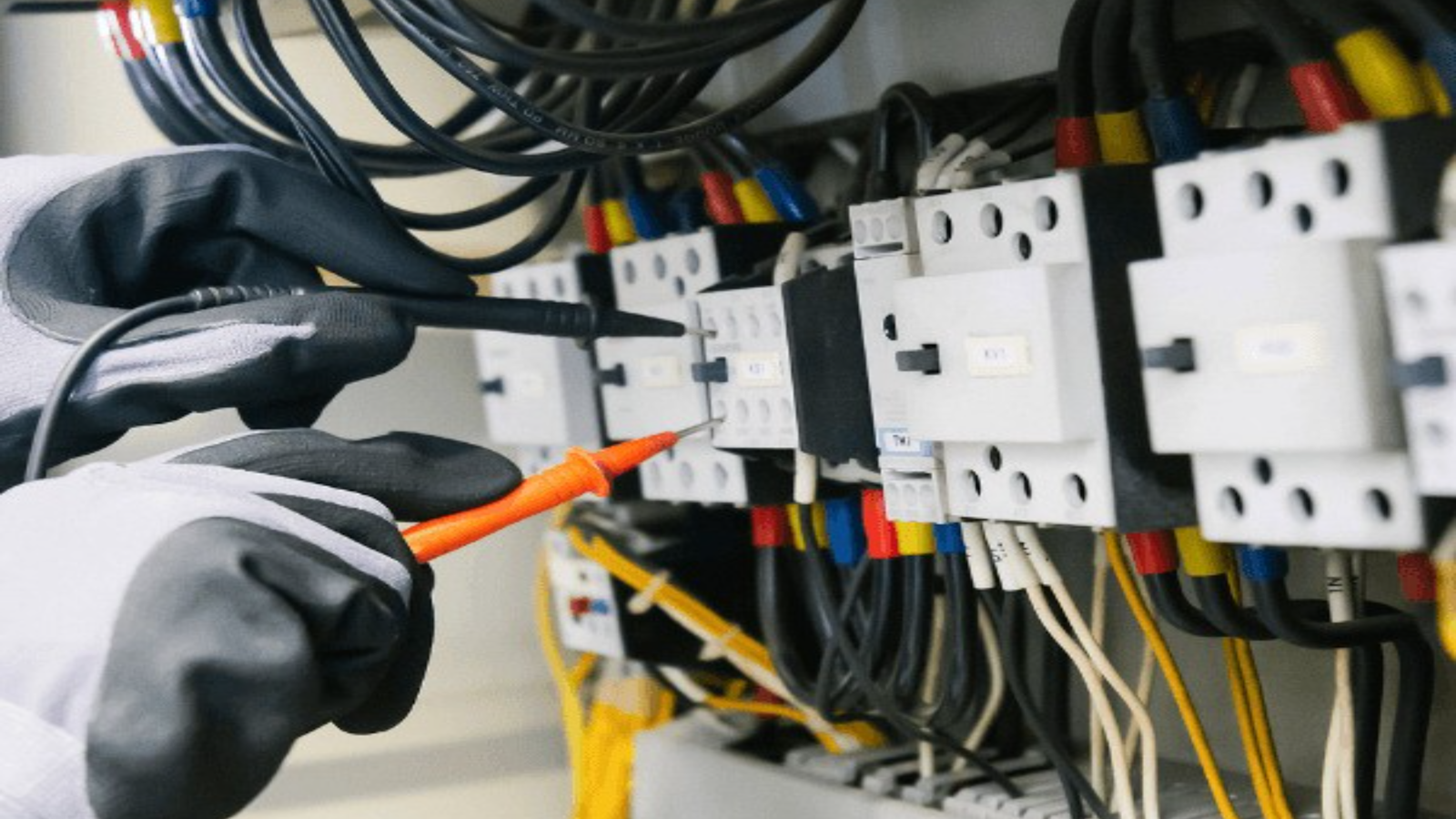
Electrical is the strictest-licensed of the residential trades. Most states require 4-5 years of apprenticeship (~8,000 hours) before you can sit for the journeyman exam, and master licensing typically requires 2+ years beyond that. The trade-off: that licensing barrier protects margins. Electricians compete with fewer rivals than detailers or cleaners, and the EV-charger / generator / panel-upgrade segment is in the middle of a multi-year demand surge driven by home electrification.
This guide walks every decision in order, with verified 2026 US market numbers. Skip what you've already done; follow sequentially if starting cold.
1. Why electrical is a strong business to start
What makes electrical different from other trades:
- **EV charger installs are a rapidly growing segment.** The federal 30C residential EV charger tax credit (30% up to $1,000) sunsets June 30, 2026 — driving a near-term demand pull-forward. Average install runs ~$2,100 nationwide; ~$1,096 median when no panel work, ~$2,744 when panel upgrade required.
- **Panel upgrades are predictable, repeatable, well-paid work.** A 100A → 200A panel upgrade averages $1,500-$4,000 ($2,000-$3,000 most common); high-cost metros $4,450-$7,050 per HomeGuide 2026. 200A is becoming the new standard for homes adding EVSE + heat pump + induction.
- **Whole-home generator demand is recession-proof and weather-driven.** Generac dealer-installed systems run $10,000-$15,000 most common; Generac holds ~75% residential market share.
- **Service work bills $100-$200/hr and customers pay it.** Electrical is the trade where customers complain LEAST about pricing because the alternative is fire.
The realistic income picture: a full-time solo journeyman doing residential service work clears $90K-$140K in year-one revenue. Master-licensed operators bidding panel upgrades + EV chargers + generators land $200K-$350K solo. A 2-truck shop with one master + one journeyman lands $500K-$1M. Sources: Angi 2026, HomeGuide, ContractorNerd.
2. State licensing — the highest barrier of any trade
Electrical licensing is multi-tier in nearly every state: Apprentice → Journeyman → Master → Contractor. Master is generally required to pull permits and qualify a contracting business. Per DOL standard registered apprenticeship, the typical apprenticeship is 4-5 years / ~8,000 hours OJT + ~576 classroom hours.
| Texas (TDLR) | Apprentice: register, $20. Journeyman: 8,000 hrs OJT under Master, $30. Master: 2 years as journeyman + 12,000 hours total, $45. CE: 4 hrs annually |
| California (CSLB C-10) | 4 years journey-level experience within last 10 years. Law/Business + C-10 Trade exams (72% Angoff-calibrated). $450 application fee. $25,000 contractor's bond |
| Florida (DBPR/ECLB) | Two classes — Certified EC (statewide; 40% qualifying experience must be 3-phase service) and Registered ER (local jurisdiction only). $10,000 minimum business net worth. 11 CE hours per 2-year renewal |
| Massachusetts | Journeyman: 8,000 hrs / 4 yrs + 600 board-approved education hours. Master: MA journeyman + 1 year experience + 150 additional education hours. CE: 21 hours per 3-year cycle (15 must be Code, 6 elective) |
| Pennsylvania | No statewide license — Philadelphia, Pittsburgh, Allentown, Erie, Scranton each require separate municipal master licenses with no reciprocity |
Specialty certifications worth pursuing:
- **NABCEP PV Installation Professional (PVIP)** — gold standard for solar work. Requires 58 hrs advanced training + 10 hrs OSHA construction + experience. PV Design Specialist exam $500 ($275 re-exam); Associate ~$125-$180.
- **EV-EVSE installer cert** — varies by state and utility program. No national-mandate cert exists, but Qmerit-network installer status is valuable for manufacturer-neutral referrals.
The 2023 NEC is the latest broadly-published edition (2026 NEC ratified but not yet widely adopted at state level as of early 2026). 33 states have adopted comprehensive AFCI for living-area circuits, 6 limit AFCI to bedrooms only, 2 have no statewide AFCI adoption, and 9 are mixed. Always check your AHJ. Doing a job to 2023 NEC standards in a 2017 NEC jurisdiction can fail inspection over wire-size or AFCI/GFCI nuances. Source: NAHB NEC adoption tracker.
3. Legal setup beyond the trade license
- **LLC formation** — file directly with state Secretary of State ($40-$300 most states; California adds $800/yr franchise tax).
- **EIN** — required for business bank account. Free at IRS.gov.
- **Local business license** — most cities $50-$400/year.
- **Surety bond** — varies by state. CA $25,000 contractor bond. AZ $2,500-$50,000 (volume-based). NV $1,000-$500,000. MN $25,000. Premium typically 1-3% of bond face per JW Surety — so $15,000 bond ≈ $150-$450/yr.
4. Equipment + truck setup — three starter tiers
Tier 1 — solo bootstrap ($15,000-$40,000)
Service work on a borrowed/used truck. Won't do panel upgrades + service entrances — those need real inventory + lift gear.
- Used cargo van or service truck ($10,000-$20,000)
- Klein hand tools — pliers, strippers, screwdrivers, voltage testers ($500-$1,000). Industry gold standard since 1857.
- Milwaukee M18 cordless platform — drill, impact, drill set ($600-$1,200). Most-popular cordless platform among professional electricians.
- Fluke multimeter — T6 series or 87V ($200-$500). Industry standard.
- Klein ET600 multi-function megohmmeter ($150-$300) for insulation testing
- Fish tape (50-100 ft), conduit benders, wire strippers, lineman pliers, hand tools ($300-$600)
- Step ladder + extension ladder ($300-$600)
- Truck inventory: stocked breakers (full set per major OEM line: SquareD, Eaton, Siemens), receptacles in each color, switches, GFCI/AFCI breakers, wire nuts, common Romex (12/2, 14/2, 12/3) — $2,000-$3,000
- Arc-rated PPE per NFPA 70E — CAT 2 (8 cal/cm²) shirt + pants minimum for residential service work, plus rubber-insulating gloves with leather protectors
Tier 2 — equipped solo ($24,000-$85,000)
Service plus panel upgrades, EV chargers, smaller generator installs.
- Everything in Tier 1, plus:
- Newer service truck or van with ladder rack + shelving package ($25,000-$40,000)
- Greenlee hydraulic conduit bender ($600-$1,500) and knockout sets ($300-$600)
- Greenlee CS-8000 circuit tracer (~$920) or Ideal 61-534 entry circuit tracer (~$140)
- FLIR TG267 entry thermal camera (~$450) OR FLIR E8-XT mid-tier (~$3,400)
- Cordless press / wire-pulling kit
- Truck inventory expanded to ~$5,000-$10,000 of stocked parts
- EV-charger demo unit + Qmerit-certified installer status if pursuing that segment
Tier 3 — multi-truck shop ($160,000+)
Two service trucks + a small office. Per Financial Models Lab, one financial model cites $90,000 for two service vans + $15,000 for office/warehouse setup. Lean 2026 startup ~$60,000; commercial-leaning >$200,000.
5. Pricing your services
Real 2026 US market prices, sourced from Angi 2026, HomeGuide, and Housecall Pro 2026:
| Service | Low | Typical | Premium |
|---|---|---|---|
| Service call / dispatch fee | $75 | $100-$150 | $200 |
| Hourly labor | $50/hr | $80-$130/hr | $200/hr |
| Diagnostic / troubleshooting | $100 | $150-$200 | $300 (often credited toward repair) |
| Outlet/switch replacement | $130 | $200 | $300 |
| GFCI outlet install | $130 | $200 | $350 |
| Ceiling fan install | $200 | $350 | $650 (new circuit/box) |
| Recessed light install (per fixture) | $100 | $150-$200 | $300 |
| Panel upgrade (100A → 200A) | $1,500 | $2,000-$3,000 | $7,050 (high-cost metro) |
| Sub-panel install (50A spa) | $400 | $500-$1,000 | $1,500 |
| EV charger (Level 2) install | $800 | $1,096-$2,744 median | $3,000+ |
| Whole-home generator install | $6,000 | $10,000-$15,000 | $25,000 |
| Whole-home rewire | $2-$10/sq ft | $10,000-$30,000 | $5-$17/sq ft |
| Hardwired smoke/CO detector | $110 | $150-$300 | $400 |
Major metros (East/West coast) run **20-40% above** Midwest rates. In Denver, panel upgrades run $4,450-$7,050 — the high end of the national $1,500-$4,000 range — because of utility coordination + permitting + cost of living.
The single most-asked-for combo in 2026 is "add an EV charger and upgrade my panel from 100A to 200A." Quoting them together captures the customer who otherwise would have called two electricians. Average bundle ticket: $4,000-$7,000. Don't quote the EV charger as a $1,096 line item if their existing 100A panel is full — explain the load math, recommend the upgrade, and price both.
Generate inspection-based panel + EV quotes in 60 seconds.
Plyrium's quote builder lets you walk the panel, photograph it, and generate a quote with NEC load calculations, permit fees, and financing pre-qual link in under a minute. Customer signs + pays deposit before you order the breaker.
See Plyrium's quote builder6. Finding your first customers
- **Friends, family, and their networks.** Free, immediate, highest-quality first-pass. Offer a discount to your first 5-10 customers in exchange for a Google review and one referral each. Old panels are everywhere in 1980s-2000s housing stock — every neighbor knows someone with a Federal Pacific or Zinsco panel that needs replacement.
- **Google Local Services Ads (LSA).** Electrician CPL: $35-$90 typical, broader range $25-$120 (JWeis Agency, Pin Point Promote). Reviews are the #1 ranking factor in the LSA algorithm.
- **EV-charger lead-gen niche.** Driven by the 30C residential sunset (June 30, 2026), demand for Level 2 charger installs is surging. Qmerit is the dominant manufacturer-neutral installer-referral channel.
- **Generator dealer partnerships.** Generac dealer programs — ~1-hour online course + initial generator purchase to start; tiered designations (Authorized → Premier → Power Pro Elite) gated on volume. Kohler Home Energy Partner — free Sales Only enrollment; $800/person for 2-day factory authorized service school to upgrade to Sales & Service or Platinum.
- **Solar referral partnerships.** Solar companies refer service-panel upgrades + EVSE work; electricians refer solar leads to NABCEP-certified partners. Common revenue stream once you're established locally.
- **Door hangers in target neighborhoods.** Industry response rate 1-3% normal, 3% strong, 5%+ elite (ThinkFlyers 2025). Target homes built 1965-1995 — those panels are reaching 30-60 years old and replacement window.
7. Operations: scheduling, permits, and inspection
Electrical permits are pulled by the master-licensed contractor (or master-qualified business) in nearly every jurisdiction. The biggest operational headache for new electrical contractors is permit + inspection coordination — every permit-required job has 2-4 inspection touchpoints + city correspondence + customer hand-offs.
Minimum operations stack:
- **Permit-tracking system** — one place where every job's permit number, inspection schedule, customer contact, and inspector communication lives.
- **A calendar customers can book directly into.** Reduces phone tag.
- **Automated SMS reminders 24h before service** — no-shows + missed inspection windows kill margin.
- **Mobile payment processor on-site** — Square, Stripe Terminal, or your software's built-in.
- **NEC code-update subscription** — Mike Holt or NFPA membership. The 2023 NEC has 24 substantive changes from 2020; 2026 NEC ratifies more. Stay current.
8. Build recurring revenue with annual safety inspections
Electrical doesn't have the same maintenance-plan culture as HVAC or plumbing — there's no "tune-up" equivalent for residential wiring. But annual safety inspections are an underused recurring revenue stream:
| Price | $15-$25/month or $180-$300/yr |
| Includes | 1 annual whole-home electrical safety inspection (panel, GFCI/AFCI test, outlet/switch sample test, smoke/CO detector test) + 10-15% off repairs + waived diagnostic on first call + priority booking |
| Why it works for you | Inspections find 2-4 small issues per home (wear-and-tear receptacle replacement, missing GFCI in bathroom, loose neutral). Customer is grateful + you're paid to find them |
| Why it works for customer | Insurance carriers occasionally request electrical safety verification on older homes; documented annual inspection often satisfies the request |
Annual safety inspection billing without busywork.
Plyrium's recurring service contracts handle the boring side: autopay through Stripe, auto-scheduled annual inspections, customer cards on file with self-service updates. When a card fails, Plyrium emails the customer with a payment link — you don't chase.
See recurring contracts in Plyrium9. Insurance — what you actually need
Cost benchmarks from Insureon 2026, NEXT, and Kickstand:
| General liability ($1M/$2M) | Solo from ~$500/year; small crews $800-$3,500/yr. Higher than most trades due to fire risk |
| Commercial auto | $1,200-$3,500/yr per vehicle (typical small-business range) |
| Workers comp (NCCI 5190) | 2025 avg $2.63 per $100 of payroll (~$87/mo per employee). State range: $1.16 (Oregon) to $6.55 (NY) |
| Tools & inland marine | Typically $5,000-$50,000 scheduled; needed because electrician tool packages frequently exceed $20,000 |
| Surety bonds | Vary by state. CA $25K, AZ $2.5K-$50K, NV $1K-$500K, MN $25K. Premium 1-3% of bond face |
Total small-shop insurance budget: **$4,000-$12,000/yr** for 1-5 employee operation. **E&O for design work** (low-voltage system design, solar engineering) is optional but recommended — typically $1,000-$3,000/yr for small shops.
10. Regulatory gotchas — NEC, AFCI/GFCI, and arc flash
Permits
Required in nearly all jurisdictions for any new circuit, panel work, service change, or hardwired equipment install. Pulled by licensed master electrician (or master-qualified contractor). Massachusetts allows employees of a licensed contractor to pull; Maryland strictly requires the master in person (PermitFlow).
AFCI/GFCI under 2023 NEC
- **AFCI (210.12(B))**: required on all 120V 15/20A outlets in kitchens, laundry, family/dining/living rooms, bedrooms, libraries, dens, sunrooms, rec rooms, closets, hallways.
- **GFCI**: now required on kitchen ranges, wall-mounted ovens, cooktops, dryers, microwaves; all kitchen receptacles; within 6 ft of any sink; outdoors; bathrooms; garages; unfinished basements; laundry.
EVSE under 2023 NEC
New §220.57 — calculate EVSE load at **7,200 VA or nameplate, whichever larger**. §625.40 revised — individual branch circuit only required for outlets >16A or >120V (Level 1 no longer requires dedicated circuit per ExpertCE). The 7,200 VA load calculation is the change that often pushes a 100A panel into upgrade territory when adding even one charger.
Energy storage (Article 706, 2023 NEC)
Tighter spacing from living areas, temperature monitoring, automatic fault shutdown, emergency disconnect. Commissioning required for non-1-and-2-family dwellings.
Arc flash labeling — 2026 NEC
Removes the prior 1,000A threshold; **all service equipment and feeders** require arc-flash labels (broader scope than 2023 per Atlantic Training).
200A residential service is now standard for new construction and required for most homes adding EVSE + heat pump + induction range. 100A panels are increasingly inadequate for electrification load. When customers ask 'do I need a panel upgrade?' for an EV charger or heat pump install, the answer is increasingly yes — and the math is straightforward to walk through if you have the load calculations on a quote tablet.
11. Your first 30 days — concrete plan
If you have your master license + state bond and you're starting today:
| Week | Focus | Outcome |
|---|---|---|
| Week 1 | Legal + insurance + bond | LLC filed, EIN obtained, business bank account open, GL ($1M-$2M) + commercial auto + state bond bound. ~$3,000-$8,000 spent. |
| Week 2 | Truck + tools + supplier accounts | Used service truck purchased + outfitted with shelving + ladder rack. Tier-1 tool kit acquired. Supplier accounts opened (Graybar, Rexel, Home Depot Pro, City Electric Supply). NEC code book current ($95-$135). ~$15,000-$30,000 spent. |
| Week 3 | First five customers + Google LSA prep | Friends, family at 20% off in exchange for honest reviews + one referral each. Practice service-call workflow. Begin Google LSA verification (background check + license + insurance docs). |
| Week 4 | Public launch + EV/generator partner setup | Google Business Profile live with 5+ reviews. Google LSA campaign live ($500/wk to start). Apply to Generac dealer or Kohler partner program. Qmerit installer status if pursuing EV charger niche. First paying public customer. |
Realistic expectation: 6-12 months to consistent full-time income for a master electrician starting solo. The journeymen who blow up first-year are usually the ones who didn't carry their permit and inspection workload — set up a tracking system from day one. The master license PROTECTS you from competition; spending the time to be operationally clean lets you charge what your competitors can't.
Electrical rewards code knowledge, mechanical precision, and clean customer communication over scale or aggression. Show up on time. Pull permits when required. Quote what's actually needed (often more than the customer thinks). Don't compete on price — compete on response time, professionalism, and explaining the load math.
Run your electrical business with Plyrium
CRM, scheduling, quotes, invoices, recurring service contracts, and an AI receptionist — built for service-trade contractors. 14-day free trial. No setup fee. No long-term contract.
Start free trial