How to Deal with Non-Paying Customers (Including Lien Rights) — 2026 Guide
Honest collections playbook for service contractors: the FDCPA rules that apply to YOU vs third-party collectors, state-by-state mechanic's lien deadlines (CA 90 days, TX 15th-of-3rd-month, FL 90 days), the demand-letter cadence that actually collects, and when to walk away vs file suit.
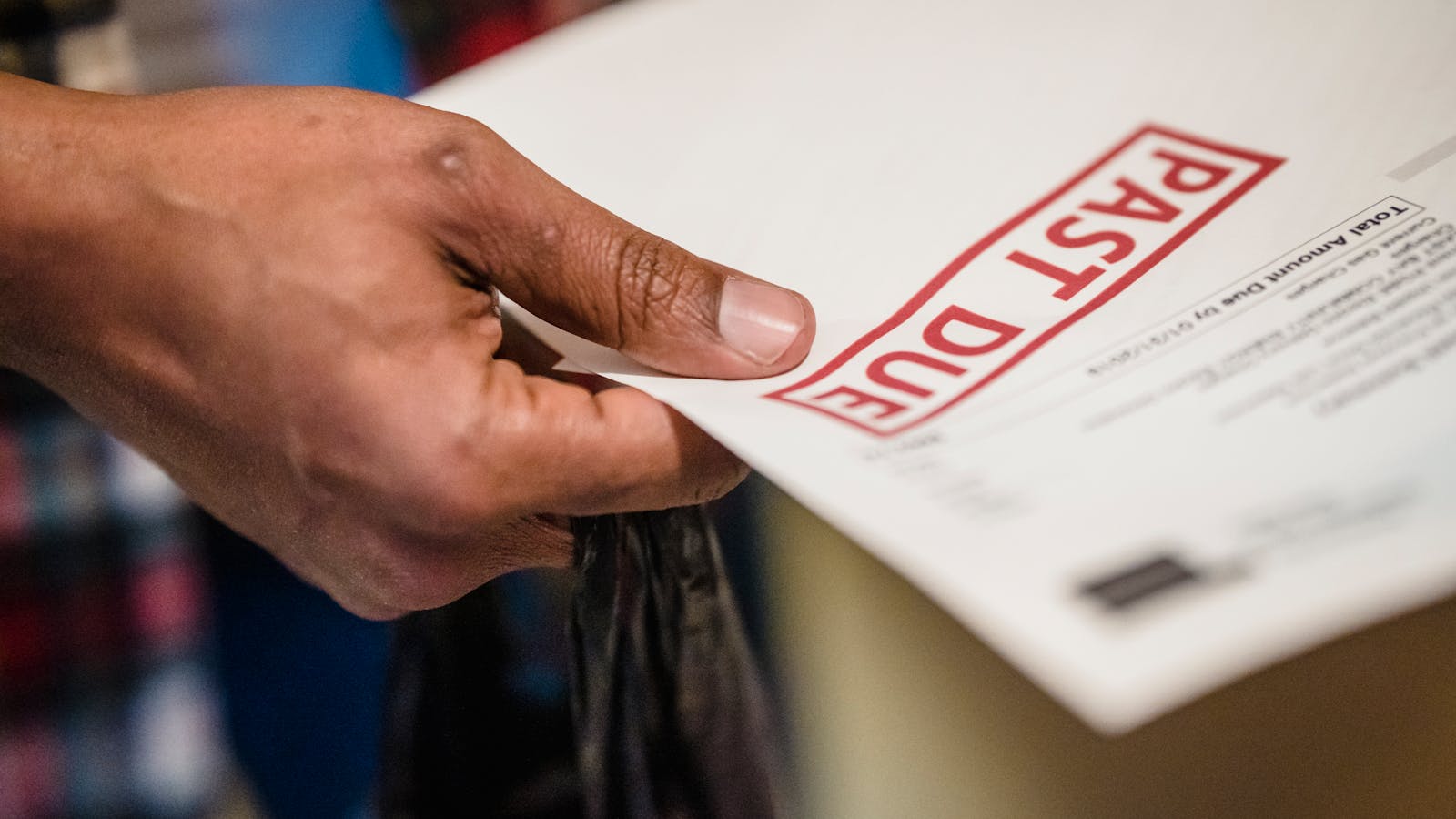
Late payment is the most common operational pain in the service trades. Per Levelset's 2022 Construction Cash Flow & Payment Report, only ~12% of construction firms always get paid on time. Per Built 2025 industry data, **70% of contractors regularly face delayed payments** and **82% wait 30+ days past expected payment date** (BuildLedger 2025). PwC pegs construction's median DSO (Days Sales Outstanding) at **83 days** — the longest of any US industry.
The good news: most non-payment is preventable, and when prevention fails, you have substantially more legal leverage as a service contractor than you might realize — especially via mechanic's lien rights. This guide is the honest playbook for service-trade collections specifically. Sources: state lien statutes (primary), FDCPA, IRS, and Levelset's 50-state lien guides.
Mechanic's lien deadlines are STRICTLY enforced — miss the window by a day and the lien is gone. State requirements differ dramatically (California, Texas, Florida, New York, and Massachusetts each have distinct mechanics). For any lien filing in those states, spend $200-$500 on a local construction attorney or use a managed lien-filing service like Levelset. The cost of being wrong is the entire lien claim.
1. The non-payment reality (verified 2026 data)
| Contractors regularly facing delayed payments | **70%** (Built 2025) |
| Contractors waiting 30+ days past expected payment | **82%** (BuildLedger 2025) |
| Construction firms ALWAYS paid on time | **~12%** (Levelset 2022 Cash Flow Report) |
| Construction businesses paid within 30 days | Less than 40% |
| Subcontractors waiting > 30 days | **72%** (Rabbet 2024); only ~5% paid on time (CCFG Credit 2024) |
| Specialty trade contractors with regular slow payment | **64%** (Billd 2025) |
| Construction median DSO | **83 days** — longest of any US industry (PwC) |
| Late-paid projects losing 1+ week of work | 76% |
| Late-paid projects losing 3+ weeks | 38% |
Translation: payment delay isn't an aberration in your trade. It's the norm. The contractors who survive long-term are the ones who've systematized prevention + collections, not the ones who hope for the best.
2. The 5-step prevention playbook (the cheapest collections work)
Every dollar invested in prevention saves $5-$10 in collection costs. The most-effective service contractors don't have a better collections process than competitors — they have a better PREVENTION process so collections rarely fire.
Five preventive measures, ranked by impact
- **Deposit on signing.** 10-50% depending on job size. California's 10%-or-$1K-whichever-less cap is the strictest in the nation; verify your state's cap (covered in the service contracts guide). For non-CA states, 25-33% is industry norm on residential.
- **Saved card on file with auto-charge on completion.** Stripe / Square handle this with PCI compliance built in. Customer authorizes saved card during signing; you charge it the moment the work passes inspection / final walkthrough. Eliminates the 30-day net wait entirely.
- **Net-on-completion** for residential service calls. "Net 30" is a commercial concept that bled into residential — there's no good reason for a homeowner to have 30 days to pay for a $400 drain unclog.
- **Late-fee clause** in your contract. **1.5% per month** is industry standard; check your state's usury cap before going higher. The fee itself rarely collects, but the EXISTENCE of the late fee changes customer payment behavior — the late-payer assumes other late-payers pay it and prioritizes your invoice.
- **File preliminary lien notice** on every job over $X threshold (typically $1,000) where state requires it. CA, TX, FL, AZ, NV, NM all have pre-lien notice requirements. Cost: $20-$60 per notice. Without the notice, you forfeit lien rights in those states. Most contractors skip this step and only realize it matters when they need the lien — by then it's too late.
For commercial customers and any residential job over $5,000, run a customer credit application: trade references, bank account verification, basic credit pull. Takes 30 minutes. Catches the customer who's stiffed 3 contractors in the last year. The 5% of customers you'll reject after running this are the same 5% that drive 80% of your collections work.
3. The collections ladder — Day 1 to Day 90+
When prevention fails, escalate systematically. Don't skip steps; don't dwell on any one step too long. The cadence:
| Day | Action | Tone / format |
|---|---|---|
| Day 1-7 (grace) | Auto-emailed first reminder | Friendly. "Just confirming the invoice arrived — it's due [date]." Assume oversight. |
| Day 8-14 | Second email + SMS | Plain language, no threat. "Following up on invoice #[X], due [date]." |
| Day 15-30 | Third reminder, firmer | Mention late fee accrual (if contract allows). "Per our agreement, a 1.5%/month late fee applies starting [date]." |
| Day 30-45 | Phone call from owner + first written demand letter | Document the call (date, time, who you spoke to, what they said). Send a certified-mail-eligible demand letter. **CRITICAL: this is when the case becomes a paper trail.** |
| Day 45-60 | Second written demand | State explicit next steps: lien (if available), small claims. Clear deadline (10-14 days). |
| Day 60-90 | Final demand / pre-collection | Certified mail, return receipt requested. 10-14 day deadline. Final step before escalation. |
| Day 90+ | Choose escalation | Mechanic's lien (if statutory deadline still open) / Small claims / Collection agency / Civil suit / Sell to debt buyer / Write off |
Each state imposes a deadline for suing on a contract. **California: 4 years written / 2 years oral. Texas: 4 years both. Florida: 5 years written / 4 years oral. New York: 6 years both. Most states: 4-6 years on written contracts.** Source: California Courts, LegalMatch state chart. After the deadline passes, the debt becomes uncollectable through court — even if the customer admits owing it.
4. What you CAN and CAN'T legally do
The FDCPA — important nuance for original creditors
The Fair Debt Collection Practices Act (15 U.S.C. §§ 1692-1692p) applies to **third-party debt collectors — NOT original creditors collecting on their own debt**. A contractor chasing their own invoice is **not** a "debt collector" under the federal statute (15 U.S.C. § 1692a(6)). This gives original creditors meaningful federal leeway.
Several states have their own debt collection laws that DO apply to original creditors: - **California**: Rosenthal Fair Debt Collection Practices Act (Civ. Code §§ 1788 et seq.) — extends most FDCPA rules to original creditors. - **Texas**: Texas Debt Collection Act (Finance Code Ch. 392). - **Florida**: Florida Consumer Collection Practices Act (Fla. Stat. Ch. 559). - Always check your state's debt-collection law before getting aggressive.
Rules that apply regardless (good baseline)
Even if you're outside FDCPA federally + outside a state extension, **state UDAP (unfair/deceptive acts) statutes + tort claims (defamation, intentional infliction of emotional distress)** still apply. Stay professional. The baseline rules to follow regardless:
- **No calls before 8 a.m. or after 9 p.m. local time** (FDCPA § 1692c(a)(1) — adopt as standard practice)
- **No contacting customer at workplace if you know employer prohibits it** (§ 1692c(a)(3))
- **No continued contact after written cease-and-desist** from customer (§ 1692c(c))
- **No harassment** — repeated/continuous calls intended to annoy (§ 1692d)
- **No threats of arrest, violence, or harm to reputation** (§ 1692d(1)-(2))
- **No threatening litigation you don't intend to pursue** (§ 1692e(5)) — this is false representation
- **No misrepresenting debt amount, status, or legal consequences** (§ 1692e generally)
- **No disclosing the debt to third parties** — calling employer, family, neighbors (§ 1692c(b))
Source: Cornell LII FDCPA overview, eCFR 12 CFR Part 1006 (Regulation F), CFPB collector limits.
5. Mechanic's lien rights — state-by-state nuance
A mechanic's lien is a legal claim against the customer's PROPERTY (not just the customer personally) for unpaid work. It's the most powerful collection tool available to service contractors — but the deadlines are strictly enforced. Miss the window by a day and the lien is gone. There are no equitable extensions in most states.
California (Civ. Code §§ 8200-8494)
- **20-day Preliminary Notice** (§ 8200) served on owner, direct contractor, AND construction lender within 20 days of first furnishing labor/materials. Late notice covers ONLY the 20 days prior to service.
- **Record lien within 90 days of completion** (§ 8412); **60 days** if owner records Notice of Completion (direct contractors); **30 days** for subs after Notice of Completion.
- **Enforce within 90 days of recording** the lien — file foreclosure suit or lien expires.
Source: Levelset California Mechanics Lien Guide, Bay Legal California Mechanic's Lien Deadlines.
Texas (Property Code Ch. 53)
- **Residential homestead**: written contract signed by both spouses (if married), filed with county clerk **BEFORE work begins**. No written contract pre-recorded = NO lien rights on Texas homestead.
- **Subcontractor pre-lien notice (residential)**: by 15th day of 2nd month following each unpaid month
- **Lien affidavit (residential)**: filed by 15th day of **3rd month** after completion/termination/abandonment
- **Commercial**: 15th day of 4th month for original contractors
Source: TX Property Code Ch. 53, Texas Easy Lien Timeline.
Florida (Fla. Stat. Ch. 713)
- **Notice to Owner**: must be **received** by 45th day from first furnishing (so send by ~day 40). Required for everyone except those in direct contract with owner.
- **Claim of Lien**: file within **90 days from last furnishing**.
- **Serve copy of lien on owner within 15 days of filing.**
Source: Sunray Notice — Florida Lien Law Timelines, Levelset Florida.
New York (Lien Law)
- **Single-family residential**: 4 months from last work
- **Commercial / multi-family**: 8 months from last work
- **Lien effective for 1 year**; New York is unusual in allowing extensions of the enforcement deadline
Source: Levelset New York.
Massachusetts (G.L. c. 254)
- **Notice of Contract** recorded at registry of deeds — earlier of: 60 days after Notice of Substantial Completion, 90 days after Notice of Termination, OR 90 days after last work
- **Statement of Account**: 90 days after Notice of Substantial Completion / 120 days after Notice of Termination / 120 days after last work
- **Enforcement suit**: within 90 days of recording Statement of Account; record attested copy within 30 days of filing
- **"Strictly enforced — no equitable exceptions"** per Mass.gov
Source: MA G.L. c. 254, Mass.gov mechanic's liens, Levelset Massachusetts.
6. Preliminary / pre-lien notice mechanics
Pre-lien notice is the foundational step that most contractors skip — and the reason most lien rights get forfeited:
- **Required in many states**: CA, NV, AZ, FL (Notice to Owner), TX (residential), NM, CO, and others.
- **Must be sent at start of work or first delivery** — typically within 20-45 days depending on state.
- **Without it, lien rights are forfeited** in those states (full or partial — e.g., CA late notice covers only 20 days back).
- **Service options**: certified mail with return receipt, OR online services (Levelset / Procore Pay, Sunray Notice, NCS Credit, Tradition Lien Service).
- **DIY cost**: certified mail (~$5-$8/notice) + your time.
- **Managed service cost**: typically ~$20-$60 per notice depending on provider/volume.
Build it into your job intake workflow: every job over $1,000 in a pre-lien-notice state gets a pre-lien notice filed automatically within the first 20 days. The $30 cost per notice is cheap insurance against losing a $20,000 lien right. Levelset, Sunray, and similar services automate this completely once configured.
7. Small claims vs civil court
Small claims dollar limits by state (2025)
| California | $12,500 individuals / $6,250 businesses |
| Texas | $20,000 |
| Florida | $8,000 |
| New York | $10,000 (NYC, Nassau, Suffolk); $5,000 most upstate City Courts; $3,000 Town/Village |
| Tennessee | $25,000 (highest tier) |
| Georgia | $15,000 |
Source: Nolo 50-state chart, LegalKB 2025 limits.
Filing fees + process
| California | $30 (≤$1,500), $50 ($1,500-$5,000), $75 (>$5,000); $100 for frequent filers (12+ claims/year) |
| Texas | $54-$100 depending on county |
| Florida | $55-$300 depending on claim size |
| NYC | $15-$35 |
| General range | $30-$100 typical, up to $400 in some jurisdictions |
**Process**: file → serve defendant → court date typically 30-60 days out → judge decides → judgment. Garnishment requires the judgment first, then state-specific garnishment process.
When to escalate to civil court
**Civil court** (for amounts above small claims cap): lawyer typically required, 6-18 months timeline, filing fees often $200-$500+. Generally only worth it for debts well above the small-claims cap AND where the debtor is collectible (has assets, employment, etc.). For most service-trade disputes, small claims is the right venue.
Small claims judges decide in 5-10 minutes. They're looking for: signed contract, invoice with date + amount, evidence of work performed (photos, signed completion form), payment history, written demand letters showing customer was given notice. Bring all of it printed out, organized, in chronological order. The contractor with paper wins; the contractor with stories loses.
8. Collection agencies — when they make sense
Pricing models
- **Contingency fee model** (most common):
- - Commercial (B2B) accounts: typically **20-35%** for fresh debts
- - Industry range: 15-50%
- - **Debt age drives price**: 60-90 days overdue ~15-25%; 6+ months ~30-50%
- **Flat-fee letter campaigns**: typically $30-$50 per account (fixed series of letters; debt remains yours)
Sources: Southwest Recovery, Kaplan Group.
When agencies make sense
| Sweet spot | **Debts $500-$5,000** |
| Below $500 | Math rarely works — contingency fees + your time exceed likely recovery |
| Above $5,000 | Lawyer + lawsuit often pays better than agency contingency |
| Volume discounts | 5-10 percentage points common for businesses placing accounts monthly |
| Trade-off | Once you assign to an agency, FDCPA applies (the agency is a third-party collector). The agency CAN'T legally do things you could do as an original creditor — strange but true |
9. Debt-buyer sale — last resort
When other options are exhausted, you can sell aged receivables to a debt buyer. The math is brutal:
- **Aged receivables sell for ~2-10 cents on the dollar** for fresh-ish (under 6 months) commercial debt
- **<1 cent on the dollar** for years-old debt
- **FTC and CFPB studies put the average debt-buyer purchase price at ~4-4.5 cents on the dollar** across portfolios
Source: JG Wentworth on debt buyer pricing.
Per IRS Form 1099-C (26 U.S.C. § 6050P), forgiving or canceling **$600 or more** of debt may require filing Form 1099-C with the customer + IRS. **Note**: a typical service contractor is generally NOT an "applicable financial entity" and may NOT be required to file 1099-C — but the customer may have to report the forgiven debt as income anyway. Verify with your CPA before forgiving large balances. Source: IRS Topic No. 431, Pub. 4681.
10. When to walk away (and the tax write-off math)
Cost-benefit math for pursuing
**Net Recovery = (Recovery Probability × Likely Amount) − (Filing Fees + Agency Fees + Your Time × Hourly Rate + Opportunity Cost)** If the math is negative, walk away. Your hourly rate spent chasing a $300 debt is your most expensive labor.
Bad debt tax write-off — IRS rules
Per IRS Topic No. 453, Bad Debt Deduction and IRC § 166:
- **Business bad debt is deductible only for accrual-basis taxpayers** — cash-basis contractors get NO deduction because the income was never recognized in the first place
- **Most service contractors are cash-basis** by default — verify with your CPA
- **Requires showing genuine uncollectibility and reasonable collection effort** (the demand letters + collection agency referral document this)
- **Reported on Schedule C** (or business return)
- Practical implication: your best "write-off" is preventing the bad debt in the first place via deposits + saved cards + lien rights
**Statute of limitations on contracts** (above): once that window passes, the debt becomes legally uncollectable AND no longer a valid bad-debt deduction in most cases.
11. Demand letter templates — the 3-letter cadence
Template 1: Friendly first reminder (Day 7-14 past due)
**Subject:** Quick reminder: Invoice #[INV-XXX] Hi [First Name], Just wanted to make sure invoice #[INV-XXX] for [brief job description] reached you. The total is [$X], originally due on [date]. If you've already sent payment, please disregard. If you have any questions about the invoice, just reply to this email or give me a call at [phone]. Thanks again for your business! [Your Name] [Business Name]
Template 2: Firm second reminder (Day 30 past due)
**Subject:** Past due: Invoice #[INV-XXX] Hi [First Name], Following up on invoice #[INV-XXX] for [job description]. The invoice was due on [date] and is now [N] days past due. Per our signed agreement, a 1.5%/month late fee applies starting [date]. Current total with late fees: [$X]. Please arrange payment within the next 14 days. You can pay via [method/link]. If there's an issue with the invoice or payment, please call me directly at [phone] so we can resolve it. Thanks, [Your Name] [Business Name]
Template 3: Final demand / pre-collection (Day 60+ past due)
**Send via certified mail, return receipt requested. Also email for speed.**
**FINAL DEMAND FOR PAYMENT** [Date] [Customer Name + Address] Re: Invoice #[INV-XXX] dated [date] — past due Dear [Customer Name], This letter constitutes a final demand for payment of invoice #[INV-XXX], originally due [date], for services performed at [job address] on [service date]. The original invoice amount was [$X]. With late fees accrued per our signed agreement, the total amount now due is [$Y]. Despite multiple prior reminders sent on [date], [date], and [date], this invoice remains unpaid. Unless full payment of [$Y] is received within 14 calendar days of receipt of this letter, we will pursue all available legal remedies, which may include: • Filing a mechanic's lien against the property at [address] under [State] law • Filing suit in [County] [Small Claims / Civil] Court • Reporting the debt to applicable credit bureaus • Referring the matter to a collection agency We would prefer to resolve this matter directly. Please call [phone] or email [email] to arrange payment. Sincerely, [Your Name] [Title] [Business Name] [Address] / [Phone] --- *Sent via certified mail, return receipt requested.*
If you say in a demand letter that you'll file a mechanic's lien or sue, you have to be willing to actually do it. Threatening litigation you don't intend to pursue can violate FDCPA § 1692e(5) (if a third-party collector) AND state UDAP laws (for original creditors). Only include threats you're prepared to execute within the stated timeline.
12. Your 30-day collection process kickstart
Set up your collections workflow once; it pays back across every customer for years:
| Week | Focus | Outcome |
|---|---|---|
| Week 1 | Audit your aging receivables | Pull all unpaid invoices. Categorize: under 30 days (track), 30-60 (active collections), 60-90 (escalation), 90+ (decision required). Quantify total dollar exposure. |
| Week 2 | Set up the prevention layer | Update contracts with deposit + late-fee + saved-card-on-file clauses. Set up Stripe Saved Card workflow. Identify pre-lien notice requirements in your state. Subscribe to Levelset / Sunray Notice for managed pre-lien filings. |
| Week 3 | Set up the collections cadence | Build the 7-step ladder (Day 1-7 → Day 90+) into your CRM/billing software with auto-emailed reminders. Save the 3 demand letter templates. Print certified-mail labels in advance. |
| Week 4 | Process your aging backlog | Apply the new ladder to existing aging receivables. For 30-60 day accounts, send Template 2. For 60-90 day, send Template 3 via certified mail. For 90+ day, decide: lien (if available), small claims, agency, or write-off. |
Realistic expectation: a service contractor who systematizes prevention + collections typically reduces bad-debt write-offs from 5-10% of revenue down to 1-2%. On a $300K business, that's $9K-$24K/year recovered straight to bottom line.
The single most-undervalued thing about collections: **the customer who pays late once will pay late always — unless you change THEIR behavior, not yours**. Late fees, pre-lien notices, saved-card-on-file aren't punishment. They're behavioral incentives that rewire how the customer prioritizes your invoice. The contractor with bulletproof systems doesn't have meaner customers; they have customers who learned to pay them first.
And the single most-undervalued thing about lien rights: **most service contractors never use them, and most non-paying customers know that.** Filing one mechanic's lien — whether it ever forecloses or not — communicates to your local market that you're not the contractor people stiff. That reputation prevents ten future non-payments.
Run your all trades business with Plyrium
CRM, scheduling, quotes, invoices, recurring service contracts, and an AI receptionist — built for service-trade contractors. 14-day free trial. No setup fee. No long-term contract.
Start free trialRelated guides
How to Write a Service Contract That Holds Up (2026 Guide)
The honest playbook for service-trade contractors: state-required clauses (CA / NY / MA / TX / FL), the FTC Cooling-Off Rule that catches kitchen-table sales, deposit caps that vary by state, change-order discipline, and the dispute-resolution clauses courts will actually enforce.
How to Price Service-Trade Work Without Underbidding (2026 Guide)
The honest pricing playbook for service contractors — your real hourly rate floor (it's higher than you think), the 3 pricing models compared, the 16% who use 3-tier pricing and out-earn the rest, and the math on why charging $25/hr is losing $10/hr.
How to Run a Service Business Without Software in 2026 (Free Templates)
Seven free Word + Excel templates plus the honest playbook for running your first 30+ customers on $0 of monthly software. Don't buy Jobber, Housecall Pro, ServiceTitan, or Plyrium until you actually need it.