How to Add Chemical Application Service to Your Landscaping Business (2026 Guide)
Honest playbook for established lawn-care operators ready to add the highest-margin recurring service in the green industry. 50-55% gross margin target, state-by-state pesticide licensing reality, mosquito segment economics ($1.87B → $2.91B by 2031), and the insurance trap that bankrupts unprepared shops.
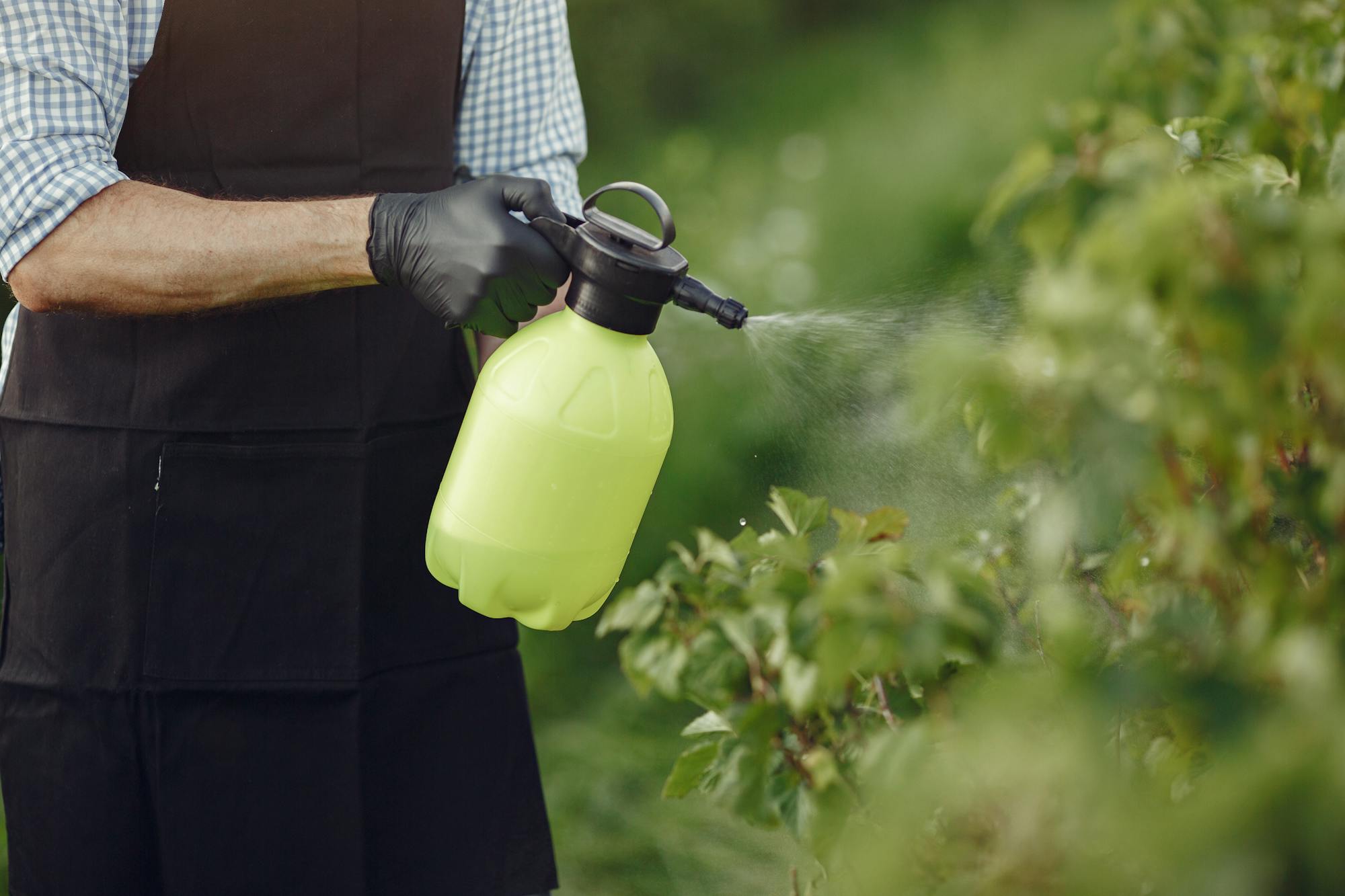
Chemical application is the most-undervalued upsell in the green industry — full stop. A mowing-only operator at $80K-$120K revenue typically runs **5-15% net margin**; the same operator who adds turf chemical apps + tree-and-shrub care + mosquito treatments hits **50-55% gross margin** on the chemical work alone, with material costs under 15% of revenue. The customer lifetime value compounds: a $250-$450/yr lawn-care customer becomes a $700-$1,500/yr customer when chemical apps + mosquito + aeration get bundled. And it's the only way to hit $300K+ revenue without scaling crew headcount.
The catch: chemical apps are also the most heavily regulated service in the trade. Every state has its own pesticide applicator license. The EPA's Worker Protection Standard (40 CFR Part 170) governs handler training, PPE, the Application Exclusion Zone, and the recording-disclosure-style posting requirements. **23 states + Washington D.C. require commercial applicators to post notification signs** at every treated property. A burned lawn gets you sued. Drift onto a neighbor's organic garden gets you sued. A dead pet from a pyrethroid mosquito treatment gets you sued. The shops that succeed long-term aren't the cheapest — they're the ones with the right license, the right insurance, and the right customer-education habit.
This guide is for the established landscaper (1-3+ years operating, $80K-$300K revenue) ready to add chemical apps as a high-margin pillar. Sources: state Departments of Agriculture, EPA.gov, Mosquito Joe + Squad + Authority FDDs, retailer pricing (Solo, Stihl, Birchmeier, Lesco, Steel Green, SiteOne), insurance carriers (Hortica, Markel, Brownyard, Prime), Turf Books, FieldRoutes, IBISWorld, Precision Business Insights. Items where pricing isn't publicly disclosed are flagged [unverified — confirm with vendor].
1. The upsell math — why chemical apps change a landscaping business
| 5-step turf program (small lawn 5K sqft) | **$210-$252/yr** at $42-$50/app × 5 (Invoicefly pricing benchmarks) |
| 7-step turf program (mid-size 5-10K sqft) | **$252-$462/yr** at $36-$66/app × 7 |
| Premium suburb 6-step program | **$273-$600/yr** (varies by region + premium positioning) |
| Mosquito control (8 visits / season, 21-day cycle) | **$300-$1,900/yr** average ~$500-$750 (Angi 2025 data) |
| Tick perimeter treatment (per visit) | $100-$500, average $200 |
| Tree + shrub deep-root injection | $100-$350/tree (small trees min $95) |
| Aeration + overseeding (10K sqft combined) | $160-$425; per acre $700-$1,400 |
| **Gross margin (chem-app specialists)** | **50-55% target** (Turf Books rule of thumb) |
| Material cost as % of revenue | ~15% (vs. 2-6% for pure mowing maintenance) |
| Net profit margin (specializing in chem apps) | 20-25% typical, 30%+ exceptional (Turf Books, FieldRoutes data) |
The upsell math by customer:
- **Mowing-only customer**: $40-$60/visit × 28 visits/yr = **$1,120-$1,680/yr**. Net margin 10-20% = **$112-$336/yr profit**.
- **Mowing + 7-step turf program**: add $252-$462/yr at 50% gross margin = **+$126-$231/yr profit**. The chemical work is more profitable per customer than the mowing work that opened the door.
- **Full bundle (mowing + turf + mosquito + aeration)**: add $300-$750 mosquito + $160-$425 aeration. Same customer is now $1,832-$3,317/yr revenue at meaningfully higher blended margin.
You already have the customer relationship. You already know which lawns have crabgrass coming in, which trees have aphids, which yards back up to woods (mosquito haven). You already have the truck-and-trailer infrastructure. The only thing standing between a $1,200/yr customer and a $2,400/yr customer is your license + a 3-step learning curve.
Industry benchmarks worth knowing
- **TruGreen** runs ~$2.87B annual revenue, **>2.5M customers, >10,000 employees, 495 locations** (Growjo). Mostly chemical apps + mosquito; minimal mowing. That's the scale ceiling for chem-app specialization.
- **Lawn Doctor** has **640+ franchised locations** spanning lawn / T&S / pest / holiday lighting.
- **Spring-Green Lawn Care** operates 30 company-owned + 126 franchised locations averaging **~$0.89M gross sales per location** (Sharpsheets FDD analysis).
- **US mosquito control market**: $1.87B in 2024 → projected **$2.91B by 2031, 6.5% CAGR** (Precision Business Insights). The fastest-growing sub-segment in the green industry.
- **US landscaping market overall**: $176-$189B in 2025, projected $213B by 2030 at 2.5% CAGR (IBISWorld). Chemical apps are growing faster than the parent market.
2. The licensing reality — state-by-state pesticide applicator license
There is no federal pesticide applicator license. **FIFRA** (Federal Insecticide, Fungicide, and Rodenticide Act) is the underlying federal statute; states administer licensure. The **EPA Worker Protection Standard (WPS)** at **40 CFR Part 170** governs handler training, PPE, decontamination, posting, and the **Application Exclusion Zone (AEZ)**.
WPS primarily covers **agricultural plant production** — farms, forests, nurseries, enclosed-space production. Pure residential turf/ornamental work is generally outside WPS jurisdiction, though state regs and product labels often replicate WPS-like requirements. The AEZ radius is **25 ft or 100 ft** depending on application type and droplet size; EPA finalized restoration of the 2015 AEZ rule in September 2024.
What you actually need is a **state commercial applicator license** in **Category 3** (or your state's equivalent — turf and/or ornamental). Verified 2026 fee + CEU data for the 8 states with the most active green-industry markets:
| State (Agency) | Category + License | Fees | Renewal + CEU |
|---|---|---|---|
| **California (DPR)** | **Qualified Applicator License (QAL)**, Category B (Landscape Maintenance) | Application: $180. Laws & Regs exam: $115. Each category exam: $115 (max 4 per app) | **$270 every 2 years** · **20 CEU hours per 2-yr cycle** (3 CCR §6502) |
| **Texas (TDA)** | **3A Ornamental & Turfgrass** (agricultural side; structural is separate via SPCS) | Noncommercial license: $140/yr. Each exam: $64. Must pass General Standards + Cat 3A | Annual; CEU varies — typically 5-10 hrs/yr [confirm with TDA] |
| **Florida (FDACS)** | **Limited Lawn & Ornamental certification** (entry-level for residential) | Examination fee: $150 (DACS-13610). Applicants must be 18+ | Periodic CEU [confirm specific hours with FDACS] |
| **New York (NYSDEC)** | **Commercial Applicator, Category 3a** (Ornamentals, Shade Trees & Turf) | Initial cert: **$450 for 3-year term** (most categories). 3a exception: **$200 annual renewal** | **10 CEU credits** per 3a recertification cycle. NY Neighbor Notification law is among the most restrictive in the country |
| **Ohio (ODA)** | **Commercial Applicator, Category 8 (Turf) + 6a (General Ornamental)** | Application: $35 + $35 per category exam. Renewal: $35. Exam = 50 questions, 90 min, 70% to pass | **5 CEU hours per 3-year cycle** (1 hr core + ≥0.5 per cat) OR re-exam |
| **Pennsylvania (PDA)** | **Commercial Applicator, Category 7 (Lawn and Turf)** | Annual cert: $40. Core exam: $50. Each category exam: $10 | License valid 3 yrs. **6 core CEU credits + up to 10 category-specific credits** per 3-yr cycle |
| **North Carolina (NCDA&CS)** | **Pesticide Applicator, Category L** (Ornamental & Turf — lawns, parks, golf, cemeteries, greenhouses) | Annual renewal: $50 | **10 CEU credits per 5-year period** for Category L |
| **Georgia (GDA)** | **Commercial Applicator, Category 24** (Ornamental & Turf Pest Control — RUPs on ornamentals/shrubs/turf) | Contractor's license: ~$55/yr. Cat 24 specific fee [confirm with GDA Pesticide Division] | Periodic CEU [confirm specific schedule with GDA] |
Spider/ant/roach treatment along a home's foundation is **structural pest control**, regulated by a different agency (CA Structural Pest Control Board with Branch 1/2/3 licenses; TX Structural Pest Control Service; NC Structural Pest Control). Your turf/ornamental license does NOT cover perimeter pest in most states. If you want both, plan for two licenses.
Path to license — typical timeline
- **Verify your state's specific category code + fees** at the state Department of Agriculture website. The table above is the starting point, not the final word — most states change fees annually.
- **Buy the study guide.** Each state publishes a core manual + category manuals (e.g., Cornell's NY 3a study guide, UF's FL Limited L&O guide). Allow 30-50 hours of study for the General Standards + your category exam.
- **Take a prep course (optional, recommended).** Local extensions, NALP, and Certified Training Institute run $99-$300 prep classes. ROI is high — first-time pass rate roughly doubles vs self-study.
- **Pass the General Standards (Core) exam first.** This is the federal-WPS-aligned material. Then your category exam. Most states allow scheduling separately.
- **Apply for the license itself.** Bonding, insurance proof (Section 5 below), and sometimes business registration are bundled into the application packet.
- **Track CEU from day one.** Most states require ongoing credits per renewal cycle (5-20 hours depending on state). Skip them and you re-examine to recertify.
From decision to first legally-compliant chemical app: **45-90 days** in most states (study + scheduling exams + application processing). California's QAL paperwork can run 90-120 days end to end. Plan the spring lead-gen window (Section 8) accordingly — a January study start is the safe path to a March-April first treatment.
3. Service categories — what to add (and in what order)
Category A: Turf chemical applications
The bread and butter. Standard packaging is a **5-step or 7-step program** spanning early spring through late fall.
| Round 1 (Feb-Mar) | Early-spring fertilizer + pre-emergent (prodiamine for crabgrass — the cost leader) |
| Round 2 (Apr-May) | Post-emergent broadleaf (2,4-D + dicamba + MCPP three-way blend) |
| Round 3 (Jun) | Summer slow-release fertilizer + insect control as needed (bifenthrin for chinch bug, imidacloprid for grub) |
| Round 4 (Aug-Sep) | Fall fertilizer + late-season post-emergent |
| Round 5 (Oct-Nov) | Winterizer (high potassium for cold-tolerance) + late post-emergent |
**7-step programs** add an early-spring pre-emergent-only round (March, before Round 1) and a separate grub/insect round (June-July). Per-app pricing drops slightly ($36-$50 vs $42-$66) but total annual revenue rises ($252-$462 vs $210-$330).
Active ingredient quick reference (commodity vs premium)
- **Pre-emergent herbicides**: prodiamine (generic Barricade) is the cost leader; dimension/dithiopyr is more expensive but has early post-emergent activity on crabgrass; pendimethalin is in the same dinitroaniline family. **Specticle (indaziflam)** runs ~$1,700/gal — premium chemistry for high-end accounts (Vista Turf).
- **Post-emergent broadleaf** (commodity): 2,4-D, dicamba, MCPP ("three-way" blends).
- **Selective grassy weed control** (higher-margin niche): quinclorac for crabgrass, fenoxaprop for goosegrass.
- **Fungicides**: propiconazole, azoxystrobin. Higher-margin niche needed for HOA contracts and transition-zone lawns.
- **Insecticides**: bifenthrin (broad-spectrum, cheap), imidacloprid (grub), **chlorantraniliprole (Acelepryn — long-residual, premium)**.
Category B: Tree + shrub care (T&S)
- **Foliar feeds / micronutrient sprays** — typically quarterly. Per-treatment pricing for typical single-family home: **$60-$70**.
- **Deep-root injection** — fertilizer + soil enhancers injected 6-8 in below surface via hydraulic probe. Pricing: **$100-$350 per tree** depending on size; small trees min $95 (Joshua Tree Experts).
- **IPM (Integrated Pest Management)** — used by SavATree, Bartlett, regional players. Inspect → diagnose → targeted treatment → monitor. Premium positioning, quarterly visits typical.
Category C: Mosquito + tick (the breakout segment)
US mosquito control market is the fastest-growing sub-segment in the green industry: **$1.87B in 2024 → projected $2.91B by 2031, 6.5% CAGR**. Standard packaging:
| Per-visit pricing (one-time) | **$75-$500** depending on yard size + severity. National avg ~$250 |
| Recurring 21-day cycle | **$100-$400/visit**, ~7-8 visits per season (April-October) |
| Seasonal plan (8 visits) | **$300-$1,900**, avg ~$500-$750. Real-world: NJ Monmouth/Middlesex = $600-$750/season |
| Recurring contract discount | **10-20% off one-time price** (incentive to enroll in season plan) |
| Tick yard treatment (one-time) | $100-$500, national avg $200. Per-acre $100-$300 |
| Tick perimeter (linear foot) | $0.25-$0.50/ft, ~$60 minimum |
Mosquito active ingredients
- **Synthetic pyrethroids** are the industry standard for barrier treatments. **Bifenthrin (Talstar P)** at 0.08% max label rate. **Lambda-cyhalothrin (Demand CS)** at 0.1%. Both have **significant residual efficacy up to 6 weeks** post-treatment when mist-applied to vegetation 0.3-3m height (Trout & Brown 2007, J Med Entomol).
- **Permethrin** for tick perimeter; AquaReslin (20% permethrin + 20% PBO) gives mortality up to 3 weeks post-application.
- **Natural / organic positioning**: cedarwood oil + garlic oil blends. **Cedarcide Original** (10% cedarwood + 10% soybean oil) is **EPA registration-exempt under FIFRA section 25(b)** ("minimum risk pesticide"). 25(b) products don't require EPA registration but most states still require state registration before sale. Useful as a premium-priced organic upsell — typically commands 20-40% pricing premium over synthetic.
VDCI is a major **public-health mosquito-control contractor** (mostly municipal aerial spraying), not a retail product line. Cedarcide and Wondercide are the better natural-line examples for residential operators to benchmark against.
Category D: Aeration + overseeding (often bundled with chem apps)
- Per square foot: **$0.07-$0.27** (Lawnstarter cost data).
- Combined aeration + overseed for 10K sqft: **$160-$425** depending on grass type.
- Per-acre combined: **$700-$1,400**.
- National avg aeration alone: **$104-$195** (HomeAdvisor).
- Best bundled with the fall fertilizer round (Round 4 in a 5-step program).
Mosquito franchise economics (benchmarks for independent operators)
| Franchise | Initial fee + investment | Royalty + Marketing |
|---|---|---|
| **Mosquito Joe** (Neighborly) | Franchise fee: $42,500. Total initial: $151,155-$193,075. Liquid req: $50K, net worth $250K | 10% royalty up to $500K, 7% above. 2% MAP + 2% local marketing group |
| **Mosquito Squad** | Franchise fee: $50,000 (Micro Territory $35K). Total initial: $162,380-$220,375 | 10% on first $250K, 9% on next $250K, 8% above $500K (waived first 12 mo). Marketing min $35K or 10% of revenue |
| **Mosquito Authority** | Initial investment: $54,000-$128,000. Franchise fee: $25,000-$50,000 | Flat 10% royalty. Ad fee $100-$150/month. Liquid req $50K, net worth $100K |
An independent operator building the same playbook can typically beat franchise economics by 10-20% on the bottom line — no initial fee, no royalty, no MAP fund. The trade-off: you build your own brand, supplier relationships, and customer-acquisition motion. The franchise fees become benchmarks, not gates.
4. Equipment + materials — what to buy first, what comes later
Phase 1: First-year minimal kit ($1,500-$3,500)
| Backpack sprayer — Solo 425 Professional (4 gal piston, 90 psi) | **~$199.99** at SiteOne / independent retailers |
| Alternative: Stihl SG 51 (3.2 gal manual) | **~$114.95** at Stihl dealerships. The SG 71 (4.75 gal) is **~$129.95** |
| Premium alt: Birchmeier Flox 10K (2.5 gal, 87 psi pro-grade) | **~$341** at QSpray + similar industrial retailers |
| Spreader — Lesco 80-lb High Wheel SS Broadcast (101186) | **~$647-$660** at SiteOne. Industry standard for residential |
| Alt: EarthWay 2170 Commercial Broadcast (100-lb hopper) | [unverified MSRP — quote varies; available via Reinders, Gemplers, Solutions Stores] |
| PPE kit per applicator | **$200-$500** — long sleeves, chemical-resistant gloves (replace every 5-7 workdays), label-specified eye protection, N95+ respirator with cartridges (~40hr filter life) |
| Initial chemicals + adjuvants (10-customer starter kit) | $300-$500 (prodiamine, three-way herbicide, urea or NPK blend, surfactant) |
| Calibration + measurement gear | $50-$100 (measuring wheel, gloves, sprayer-calibration jug) |
| **Phase 1 total** | **~$1,500-$3,500** for a solo operator's first year |
Phase 2: Adding scale (year 2-3, $8,000-$20,000)
- **Skid sprayer (truck-mounted)** — Lesco 100-gal low-profile with 5.5 hp Honda + hose reel: typical **~$6,000** new (SiteOne). Hose + reel typically sold separately, add $400-$800.
- **Z-Spray Intermediate ride-on** (used market): 2018 unit ~$8,300; 2019 ~$11,500. New retail [unverified — dealer-direct]. Big productivity jump for properties >0.5 acre.
- **Steel Green SG46** (50-gal liquid + 320-lb granular, fits 48-in gate): **$13,395 new** (Steel Green announcement). The SG36 (30-gal + 220-lb, fits 36-in gate) is in the same product family at lower price [unverified specific MSRP].
- **Mosquito mister setup** — backpack ULV mister or skid-mounted mister adds $1,500-$5,000 for the equipment. Bifenthrin/lambda-cyhalothrin at $30-$60 per residential treatment in materials.
- **Truck/trailer expansion** — dedicated chemical truck with locked cabinet (some states require), hose reel, signage. Typical buildout $3K-$8K beyond the truck itself.
Move to Phase 2 when you've got 80-120 recurring program customers. Below that, the backpack-and-spreader Phase 1 kit out-economics the skid sprayer (lower fixed cost, lower minimum daily revenue to justify). Above that, the skid pays for itself in 6-12 months on labor savings alone.
Truck + trailer setup costs
Specific verified figures vary widely. Industry rule of thumb cited in lawn forum + insurance contexts: a 2-5 employee shop with a truck, expensive tools, doing pesticide app expects total insurance of **$3,000-$6,000/yr** (Section 5), suggesting capital outlay scale in the **$15K-$50K total** range for a first commercial truck-and-trailer-and-equipment buildout for chemical apps specifically.
5. Insurance + the pesticide-coverage trap
Most operators discover this only after their first burned-lawn complaint. **Base general liability typically EXCLUDES pesticide application damage unless an endorsement / pesticide rider is added.** This is the single biggest insurance trap in the chemical app trade. Add the rider before your first treatment, not after.
Coverage levels — verified 2026 ranges
| **Base lawn care GL** (no chems) | **$40-$46/mo, ~$550/yr** (Insureon, NEXT, MoneyGeek) |
| **With pesticide ops bumped in** | **~$121/mo, $1,453/yr** typical |
| **California premium** | ~$135/mo (highest litigation environment) |
| **Pesticide rider (small endorsement)** | **+$150/yr** for a $2M aggregate (real-world quote) |
| **Dedicated pesticide application coverage** | **+$700/yr above base** for $1M dedicated |
| **Total all-in for 2-5 employee chem-app shop** | **$3,000-$6,000+/yr** |
| **Total range for landscape businesses** | $1,100-$3,500/yr typical small ops · $391-$2,572/yr lower-end estimate |
Two distinct coverages you actually need
- **Pesticide Application Coverage** — covers burned lawns, overspray onto wrong plants, drift onto neighbor's yard. The most common claim type by far.
- **Pollution Liability** — covers tank leaks, soil contamination, water contamination, environmental remediation. Lower-frequency but higher-severity claims (a leaking 100-gal skid in a residential driveway can run six figures to remediate).
Carriers serving chemical app shops (verified 2026)
- **Hortica** (a Sentry Insurance company) — purpose-built for horticultural businesses. Loss-control programs specific to pesticide use (Hortica.com). Most-recommended carrier in green-industry forums.
- **Markel** — Pest Control Insurance program (Markel.com).
- **Brownyard Group** — PCO Pro pest-control program (Brownyard.com).
- **Prime Insurance Company** — chemical-applicator E&S (excess + surplus) market for harder-to-place risks (PrimeIS.com).
- **ArboRisk** — tree-care/arborist focused but writes pollution liability across green industry.
Some sources reference "Rain & Hail" — that's primarily a CROP insurance carrier (now Chubb Agribusiness), not a fit for residential pesticide ops. **Heffernan** and **AssuredPartners** are large brokers (not direct carriers) that place green-industry coverage. Use a broker if you need help placing a hard-to-place risk; use the direct carriers above for standard placements.
6. The recurring-program operations problem (and the Plyrium fit)
Up to this point, the math works for chemical apps. The execution problem is what kills most shops: **5-step + 7-step + mosquito + T&S programs all run on different cadences, with different billing models, and overlap inconsistently across customers.** A typical multi-program customer has 12-15 visits per year split across 4 different cadence schedules. Doing this on paper or in a spreadsheet — or even in a basic FSM that only handles one-off jobs — is how shops end up missing visits, double-billing, or losing the customer.
Plyrium is built for this. The features that matter for chemical app shops:
- **Recurring service contracts with three collection modes** — `auto_invoice` (cron generates a draft invoice each cycle), `autopay_stripe` (saved card auto-charges via Stripe Connect with 0% Plyrium platform fee), `manual_collect` (no automatic billing — you collect cash/check/Venmo at the visit). The third mode is the one that matters: **about half of chemical app customers prefer paying in person at each visit**. HCP and Jobber are autopay-only. Plyrium handles all three.
- **Maintenance reminder rules with cadence math** — "annual aeration is due" auto-fires SMS + email when last service is `frequency_months - reminder_lead_days` ago AND no future booking exists. Auto-suppressed if you've already scheduled the visit. Round 1 / Round 2 / Round 3 / Round 4 / Round 5 each get their own reminder rule.
- **AI voice receptionist with service-area gating** — when a homeowner calls about mosquito control, the receptionist haversines their address against your `service_radius_miles` BEFORE checking the calendar. Out-of-area callers get a polite decline + tagged for demand-mapping (so when you expand, you know where the demand is).
- **Customer assets / equipment tracking** — track per-customer lawn details: square footage, problem areas ("crabgrass in the strip near the driveway"), tree count for T&S, pet warnings (the dog that comes out the back door), gate codes. Voice receptionist reads this mid-call for returning customers.
- **Two-party-consent recording disclosure auto-injected** — if you're operating in CA / FL / IL / MD / MA / MI / MT / NV / NH / PA / VT / WA, the Plyrium voice receptionist's recording-disclosure language is automatically prepended to every greeting. You can't accidentally remove it.
- **Native Google Business Profile management** — auto-publishes posts on Mondays + Thursdays, AI replies to reviews, sends review requests 2-72 hours after every completed treatment with smart-routing (4-5★ goes public to Google, 1-3★ goes to your private feedback inbox first). Critical for the spring lead-gen window when prospects search "mosquito control near me."
- **Pipeline kanban for spring rush** — drag-to-reassign incoming leads through New / Drafted / Needs your call / Replied / Resolved. Spring lead volume can 5-10x normal flow; the kanban keeps it organized.
- **Bring Your Own Pay Link (BYOPL)** — set your own Cash App / PayPal / Venmo URL as a payment alternative on customer invoices. None of Jobber / HCP / ServiceTitan let you do this — they all want you on their processor.
Plyrium handles all three collection modes for recurring chemical app programs
Voice ($149/mo, AI receptionist + GBP basics + CRM + quotes + invoices), Visibility ($399/mo, full GBP management + AI review responses + 4 GBP posts + 1 SEO blog/mo), Bundle ($699/mo, everything above + recurring contracts with Stripe autopay + multi-tech scheduling + GPS tracking), Front Office ($1,199/mo, Bundle + Voice + 8 GBP posts + 2 SEO blogs + quarterly strategy call + 1-hr SLA). $0 setup, no contract, 14-day trial with no charge for 14 days. The Bundle tier specifically is built for the multi-program chemical app shop.
Compare tiers + start a 14-day trial7. Pricing — the 5-step / 7-step model + per-app math
Per-square-foot pricing benchmarks (2026)
- **Pro range (chem only, no labor markup)**: $0.02-$0.08/sqft per application.
- **All-in installed (including labor)**: $0.12-$0.32/sqft.
- **5,000 sqft lawn**: ~$100-$400 per application — note this matches the $40-$60 industry-standard low end up to $400 for premium positioning.
- **10,000 sqft lawn**: ~$400/visit; ~$1,200/yr on full program.
- **Full season (4-6 visits)**: $260-$600/yr typical; **$0.02-$0.06/sqft annually** at full program.
Sources: Angi fertilizer pricing, HomeAdvisor lawn fertilization, HomeGuide lawn fertilizer cost.
Pricing strategy — three tiers
- **Bargain (race-to-the-bottom — avoid)**: $30-$36/app, 5-step at $150-$180/yr. You'll get customers but you won't make money. Margin <40%, no room for problem customers, no budget for premium materials.
- **Standard (the volume play)**: $42-$50/app, 5-step at $210-$252/yr. Where TruGreen and Lawn Doctor live. 50-55% gross margin, good route density, scalable.
- **Premium (the niche play)**: $66+/app, 6-step at $400-$600/yr. Organic-positioning, white-glove service, fewer customers + higher margin per customer. Where the smart owner-operators end up at year 3-5.
Most homeowners don't think "$45 per application" — they think "$252 for the year." Anchoring on the annual price drops cancellation rates because the customer is committing to the season, not deciding monthly. Plyrium's recurring contracts let you bill that way (auto_invoice generates each round; autopay_stripe charges saved card; manual_collect billed in person each visit).
Material cost as % of revenue
- **Materials = ~15% of revenue** in maintenance/chem-app operations (vs 2-6% for pure mowing maintenance, up to 30% for installs)
- **Tech labor**: 15-20% of revenue
- **Drive time + truck operating cost**: 8-12% of revenue (varies wildly by route density)
- **Insurance + license + admin**: 5-8% of revenue
- **Net margin target**: 20-25% sustainable, 30%+ exceptional
Customer acquisition cost benchmarks
- **Door hangers**: ~60 hangers/hour delivery rate. Industry benchmark **1 customer per 240 hangers**, **CAC ~$18/customer** (Nexus Marketing data)
- **Average monthly revenue per customer (2-yr retention model)**: ~$10.63/mo on annual programs
- **Recommended door-hanger campaign**: 1,000-2,500 for a tight neighborhood targeting; 10,000+ for citywide saturation
- **Route density boost**: the second-order benefit — saturation compresses drive time, raising effective margin per app by 5-10%
8. Customer trust — drift, burn, pets, and the posting requirements
This section summarizes common state requirements and litigation patterns based on industry sources. Specific posting + notification requirements vary by state. Drift damage litigation depends on your state's nuisance + trespass + product liability law. Consult a local attorney before your first treatment, especially if you operate in CA / NY / MA / NJ.
Failure mode #1: Fertilizer burn from over-application
**The most common claim by frequency.** Yellow/brown streaks following spreader paths, sharp lines between healthy and damaged zones; symptoms within days, sometimes overnight. Mechanism: salt buildup in soil dries out grass. Triggers: wrong N rate for grass type/season, applying granular to wet leaves, wrong spreader calibration, stuck spreader gate dumping at one spot. Sources: TruGreen lawn damage guide, Today's Homeowner remediation.
Failure mode #2: Drift damage
**Vapor drift** can travel **>1 mile** with ester products in warm temps (Penn State Ag Extension). Applicators are liable for drift-related damage and can be sued under nuisance, trespass, and product-liability theories. The classic case: a 2,4-D ester application on a calm-feeling 80°F morning evaporates and drifts onto a neighbor's tomato garden 800 feet away three hours later, killing $1,200 of vegetables. Apply only in suitable conditions (wind 3-10 mph from a known direction, no temp inversion); document conditions in your job notes; carry the pollution liability rider you priced in Section 5.
Failure mode #3: Posting requirements (the "24-hour flag")
**23 states + Washington D.C. require commercial applicators to post notification signs and/or pre-notify abutters.** Sign requirements (typical):
- Conspicuous spot on the treated property
- Left in place **24 hours** typical
- **≥5"×4" waterproof, ≥14" off ground**
- Required info: brand/common name of product, chemical type (fungicide/herbicide/insecticide), applicator company name + phone, date/time of application
- Pre-notification to abutting residences (where requested in writing) typically **≥1 business day before application**
Sources: Ohio State Pesticide Education on lawn posting, Beyond Pesticides state lawn notification laws.
Failure mode #4: Bee + beekeeper notification
Multiple states (CA, IA, NJ, TN, AZ, KY, WI, IL, etc.) operate **apiary registries** + require pre-notification to registered beekeepers within a **1-mile radius** when applying products labeled toxic to bees. Standard window: **48 hours prior**.
- **Iowa**: bee-toxic products may not be applied to blooming crops by commercial applicators **between 8 AM and 6 PM** within 1 mile of a registered apiary.
- **BeeCheck** (beecheck.org) is a multi-state online registry/notification platform. Applicators register territories and get pinged on bee yards before treatments.
- **NJ + TN** require annual registration of all bee yards.
- Bee-toxic active ingredients to flag: imidacloprid, clothianidin, thiamethoxam (neonicotinoids); bifenthrin + lambda-cyhalothrin during bloom.
Failure mode #5: Pet + child re-entry interval
- Standard industry practice: re-entry interval typically **24 hours (or until dry, whichever is longer)** for residential lawn applications.
- Specific re-entry language is product-label-driven — check every label.
- Communicate to customer at booking AND in the post-app text/email: "keep pets and kids off the lawn for 24 hours."
- **Dead-pet claims** are rare but high-impact (emotional damage + sentimental value can run six figures in jury verdicts). The pollution liability rider matters here.
The shops that get sued aren't the ones that occasionally make a mistake — every shop does. The shops that get sued are the ones that didn't tell the customer what to expect. Post the flag. Send the SMS. Email the re-entry window. Document conditions. Keep job notes for 7 years (statute of limitations on most pesticide claims). The Plyrium maintenance reminder rule + per-customer SMS template handles this automatically once configured.
9. Marketing — the spring window + program packaging
The spring window is real (verified data)
- **Marketing starts late February, ramps mid-March, peaks April influx.**
- **April + July account for ~80% of new customer acquisitions** for lawn care companies
- **30,000 mentions of "spring cleaning"** on Nextdoor in a 12-month period (proxy for homeowner intent)
- **Hit each prospect ≥3 times** before season starts (RealGreen / Nextdoor data)
Channels that work for chemical apps specifically
- **Door hangers** — saturation-style. 1,000-2,500 in a tight neighborhood you want to dominate; 10,000+ for a citywide push. Conversion ~1 customer per 240 hangers, CAC ~$18.
- **Google Business Profile + Local SEO** — "mosquito control near me" is searched 5-10x more in May vs December. Native GBP management (Plyrium Visibility / Bundle / Front Office tier) auto-publishes 4-8 posts per month.
- **Google Ads (search)** — "5-step lawn care program [your city]" + "mosquito control [neighborhood name]." CPCs in chem-app queries run $4-$12 in most markets. ROI works if average customer LTV > $400/yr.
- **Facebook + Nextdoor neighborhood ads** — visual before/after of a treated yard. Cheap CPCs ($0.50-$2.00) but lower intent than search.
- **Yard signs at completed treatments** — old-school but proven. 8"x6" two-sided sign with "Treated by [Your Company] · [phone]" left for 7-10 days at every job. Can drive 1-3 neighbor inquiries per sign in dense neighborhoods.
- **Customer referral incentives** — "Refer a neighbor, get $50 off your next round." Drive cost of acquisition under $25/customer when working.
Positioning vs national franchises
- **TruGreen / Lawn Doctor / Spring-Green** compete on price + brand recognition. They will undercut you on cost-per-app.
- **Independent operator advantages**: same applicator every visit (vs TruGreen rotating techs), customizable program (vs rigid 5-step), local market knowledge (which weeds + pests + fungi are active this season in your specific micro-climate), faster response time on problems.
- **Don't compete on price.** Compete on knowing the customer's lawn. The shops that know which lawn has what problem build moats that national franchises can't match.
Recurring program packaging — the wedge
Pre-packaged annual programs convert at 2-3x the rate of à-la-carte single applications. Sample annual revenue per residential customer:
- **5-step turf only**: $210-$252/yr
- **7-step turf only**: $252-$462/yr
- **5-step turf + mosquito (8 visits)**: $510-$1,002/yr
- **Premium suburb full bundle (turf + T&S + mosquito + aeration)**: $1,200-$2,400/yr
Sources: Landscape Leadership packaging strategy.
TruGreen and Lawn Doctor scale on auto-renewal. The customer enrolls once; the program renews each spring without re-quoting. Plyrium's `recurring contracts` (Bundle/FO tier) handle this — set the cadence once, the system generates appointments + invoices/charges per cycle, handles pause/resume on customer request, and auto-emails both contractor + customer on payment failure. The mechanical-retention layer is what turns a $250 first-year customer into a $400-$1,500 multi-year customer.
10. Next steps — the 90-day path to first treatment
| Week | Focus | Outcome |
|---|---|---|
| Week 1-2 | License research + study | Verify your state's specific category code, fees, and exam structure (start at the table in Section 2). Order the core manual + your category manual. Budget 30-50 study hours. |
| Week 3-6 | Insurance shop + commercial structure | Get quotes from Hortica + Markel + Brownyard for pesticide-rider GL. Decide on entity (LLC vs sole prop). Purchase commercial truck/trailer if you don't have one. |
| Week 7-9 | Exam + license application | Take General Standards exam, then category exam. File license application with state agency. Wait time 2-8 weeks. |
| Week 10-11 | Equipment + supplier setup | Buy Phase 1 kit (~$1,500-$3,500): Solo 425 backpack, Lesco 80-lb spreader, PPE per applicator, starter chemicals from SiteOne / Ewing / Lesco / Advanced Turf. Calibrate everything before first paid treatment. |
| Week 12 (license arrives) | First treatments + customer comms | Schedule existing mowing customers as the first 5-10 chem app customers (built-in trust). Send proper posting flags. Pre-notify any abutters who requested. Document conditions in job notes. Take before/after photos for marketing. |
| Week 13+ | Spring lead capture | Start door hanger saturation. Wire up Plyrium recurring contracts for the program billing. Wire maintenance reminder rules so Round 2 / Round 3 / Round 4 / Round 5 SMS + email auto-fire. Wire AI voice receptionist with service-area gating so spring lead volume doesn't break your phone. |
Most operators who start in February are running first treatments by mid-April and have 30-60 program customers signed up by end of June. Year-1 revenue from chem apps for an established mowing business with 200 customers typically runs $40K-$120K incremental on top of mowing revenue, at 50-55% gross margin. By year 3, the chem-app book often exceeds the mowing book in profit dollars.
Plyrium Bundle handles 5-step / 7-step program billing + maintenance reminders + AI receptionist + GBP
$699/mo flat (15 seats included), $0 setup, no contract. The Bundle tier specifically bundles recurring contracts (auto_invoice / autopay_stripe / manual_collect) + maintenance reminder rules + AI receptionist with service-area gating + native GBP management + AI review responses + multi-tech scheduling + GPS tracking. 14-day trial, no charge for 14 days. The math: replacing a $99/mo Jobber AI add-on + a $400/mo SEO agency + a separate phone-tracking tool already exceeds the Bundle price.
Start the 14-day trialCross-references: the landscaping start-from-scratch guide covers the broader business setup. The pricing service work guide covers floor-rate math + pricing strategy. The non-paying-customers guide covers collections law + mechanic's lien deadlines (relevant for unpaid program contracts).
Run your landscaping business with Plyrium
CRM, scheduling, quotes, invoices, recurring service contracts, and an AI receptionist — built for service-trade contractors. 14-day free trial. No setup fee. No long-term contract.
Start free trialRelated guides
How to Start a Landscaping Business from Scratch in 2026
A practical guide from one mower to a full crew — with real 2026 numbers, no fluff. Built for solo operators and 2-person crews.
How to Price Service-Trade Work Without Underbidding (2026 Guide)
The honest pricing playbook for service contractors — your real hourly rate floor (it's higher than you think), the 3 pricing models compared, the 16% who use 3-tier pricing and out-earn the rest, and the math on why charging $25/hr is losing $10/hr.
How to Deal with Non-Paying Customers (Including Lien Rights) — 2026 Guide
Honest collections playbook for service contractors: the FDCPA rules that apply to YOU vs third-party collectors, state-by-state mechanic's lien deadlines (CA 90 days, TX 15th-of-3rd-month, FL 90 days), the demand-letter cadence that actually collects, and when to walk away vs file suit.