How to Start a House Cleaning Business from Scratch in 2026
A practical guide from business model to first paying customer — with real 2026 numbers, no fluff. Built for solo founders and 2-person teams.
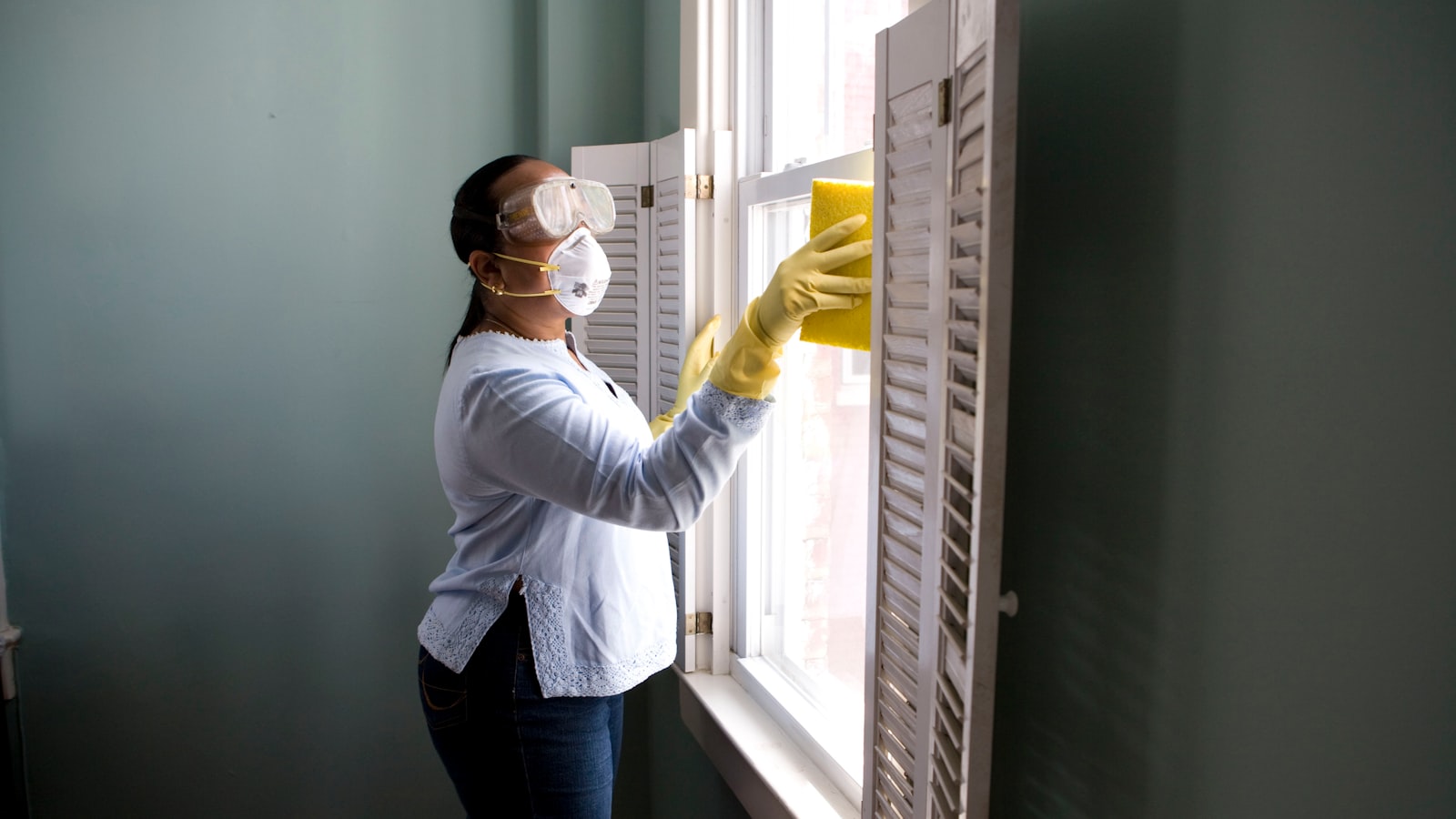
House cleaning is one of the few service trades where you can be operational with under $1,000 in supplies and a reliable car — and where almost every household in the country is a candidate customer. That's the upside. The downside: it's also one of the most competitive trades, with platforms like Handy, Care.com, and Thumbtack racing the price floor down. The cleaners who actually make money in 2026 don't compete on price. They build recurring books, manage scope creep, and price their deep cleans honestly.
This guide walks every decision in order, with verified 2026 US market numbers. Skip the sections you've already done; follow them sequentially if you're starting cold.
1. Why house cleaning is a strong business to start
The US residential cleaning market is roughly $14B in 2025-2026 and growing 4-6% annually. According to Jobber's 2025 Home Service Economic Reports, median cleaning revenue rose 5-7% in 2025 even on flat-to-down job volume — operators are upselling and shifting toward recurring contracts rather than chasing more new jobs.
What makes residential cleaning different from other trades:
- **Recurring revenue is the default.** Most customers want bi-weekly or monthly service. Your second visit pays you to be there — no re-acquisition cost.
- **Startup cost is genuinely low.** A solo bootstrap is $500-$2,000 in supplies. No truck. No specialty license. No major equipment.
- **No employees required to start.** Many full-time solo cleaners run profitably for years before adding a single helper.
- **Demand is recession-resistant.** People who cut back in soft economies cut frequency (weekly → bi-weekly), not the service entirely. Total revenue per customer holds up better than most trades.
The realistic income picture: a full-time solo cleaner doing 2-3 visits a day at a typical $174-$256 ticket size (Jobber 2026 data) lands somewhere between $48K-$75K in year-one revenue. Mature operators with steady recurring books clear $80K-$110K solo. Two-person teams that have nailed scheduling and route density can push $150K+. Source: HouseCallPro 2026 pricing guide, Jobber economic reports.
2. Pick your model: solo, two-person team, or hybrid
Three setups, each with different economics:
| Solo cleaner | Lowest startup cost ($500-$2,000). 2-3 cleans per day max because every minute of drive + setup + work is yours. Best for first 6-12 months — you learn what jobs are profitable before staking payroll on it. |
| Two-person team | Higher startup ($2,000-$5,000) + payroll. Cuts time-on-site nearly in half (2 people don't double speed but they get close). Lets you take 4-5 jobs per day. Most cleaners scale into this in year 2. |
| Hybrid (you + occasional helper) | Solo for standard recurring cleans; bring a helper for deep cleans, move-outs, and post-construction. Cheapest path to two-person economics without committing to W-2 payroll year-round. |
The biggest mistake new cleaners make is hiring a helper before they've personally done 50+ jobs. You don't yet know what "a clean kitchen" takes you in time, what supplies you actually use, or which job types are profitable — so you can't train someone on those things. Run solo until your gut knows the answer.
3. Legal setup (one weekend, $200-$500 depending on state)
Form an LLC
Sole proprietorship offers zero personal liability protection. If a customer accuses you (or a future helper) of theft, breaks something expensive, or slips on a wet floor, your personal house and savings are on the table. An LLC fixes that for under $500 in most states.
| Kentucky (cheapest) | $40 filing fee |
| Wyoming | $100 filing + $60/year annual report |
| Texas | $300 filing fee |
| California | $70 filing + $800/year franchise tax (mandatory regardless of income) |
| New York | $200 filing + $300-$1,500 publication requirement (must publish in 2 newspapers for 6 weeks) |
File directly with your state's Secretary of State website. Don't pay LegalZoom, Incfile, ZenBusiness, or similar services $300+ to do paperwork that takes 30 minutes. The state filing fee is the same either way; the markup is hand-holding you don't need.
Get an EIN (free)
An Employer Identification Number is required to open a business bank account, hire help, and contract with most commercial customers. Apply directly at IRS.gov — it's instant and free. Don't pay third-party sites that charge $50-$300 for the same form.
Local business license
Most cities require a general business license — $50-$400/year for small operators. There is no specialty "house cleaning" license in any US state — it's a general business registration, plus the insurance + bonding combo covered in Section 9. Sources: NEXT Insurance, Jobber Academy.
4. Equipment + supplies — three starter tiers
What you need depends on what services you're offering. Three honest tiers:
Tier 1 — solo bootstrap ($500-$1,200)
Enough to do standard recurring cleans and basic deep cleans. Will NOT do post-construction or hoarder-level work.
- Commercial-grade vacuum with sealed HEPA filtration ($300-$500) — Sebo, Miele, ProTeam, or Sanitaire are the durability standards. "HEPA-style" or "HEPA-like" labels are NOT real HEPA — only sealed-system vacuums actually trap allergens
- Two-bucket mop system + grit guards ($50-$120) — keep dirty water out of clean rinse
- 30-50 microfiber cloths in a color-coded system ($60-$120). Standard convention: red for bathrooms, yellow for bath surfaces, green for kitchens, blue for general — prevents cross-contamination
- Sturdy cleaning caddy ($30-$60)
- Eco-friendly chemical starter kit ($150-$250) — Branch Basics concentrate is a common pick; if not eco, stick to JanSan-channel brands like Spartan or Diversey rather than retail Walmart products
- Squeegees, scrub brushes, scrub pads, magic erasers ($40)
- Step stool that fits in your car ($30)
- Disposable gloves + N95 masks for messy jobs ($30)
Tier 2 — equipped solo / 2-person starter ($2,500-$5,000)
Adds the equipment that makes deep cleans and move-outs profitable. This is where most solo cleaners settle by month 4-6.
- Everything in Tier 1, plus:
- Steam cleaner ($150-$400) — sanitizes grout, tile, sealed hard floors without chemicals; sells well as a premium upsell
- Carpet spot extractor — Bissell SpotClean Pro ($200-$300) handles 80% of pet stains and incidental spills without renting larger equipment
- Cordless backpack vacuum (ProTeam Super CoachVac, $400-$600) — speeds up large homes considerably; also a 2-person scaling enabler
- Microfiber mop heads (10-20 swappable, $60-$100) — saves laundering time and lets you carry clean mops between jobs
- Full chemical lineup: degreaser, disinfectant, glass cleaner, stainless cleaner, stone-safe cleaner, oven cleaner ($200-$400)
- Branded uniform / shirts ($150-$300 for 5-7 sets) — looks more professional, free billboard at every job
Tier 3 — pro / multi-team setup ($8,000-$15,000+)
Capable of post-construction, foreclosure cleans, and small-team operations. Don't buy this in year one — invest as you book the work.
- Commercial wet/dry vacuum + extractor for big spills ($400-$800)
- Tile + grout brush attachment system ($200-$400)
- HEPA air scrubber for post-construction dust ($600-$1,500)
- Small wet-floor signage + safety cones ($50-$100)
- Branded company van or wrapped vehicle ($8,000-$25,000 used to new) — material upgrade in customer trust + free local advertising
- Smart locks / Keycafe / lockbox systems ($100-$500) for managing multiple-property keys safely (more on this in Section 7)
Spartan Chemical, Diversey, and Betco are the three professional cleaning chemical brands most cited in JanSan distribution. For consumer-facing eco brands, Branch Basics is the most-reviewed concentrate. Avoid no-name Amazon chemical brands — formulation varies wildly batch-to-batch and a bad bottle on a customer's hardwood floor is your problem to fix.
5. Pricing your services
Real 2026 US market prices, sourced from HouseCallPro, Jobber Academy, HomeAdvisor, and HomeGuide:
| Service | Low | Typical | Premium |
|---|---|---|---|
| Hourly rate (per cleaner) | $25/hr | $45-$55/hr | $75/hr |
| Standard clean — 1 BR / studio | $90 | $120-$150 | $200 |
| Standard clean — 2 BR | $120 | $150-$200 | $250 |
| Standard clean — 3 BR | $130 | $180-$250 | $300 |
| Standard clean — 4 BR+ | $150 | $220-$300 | $400+ |
| Per-square-foot (recurring) | $0.05/sq ft | $0.10-$0.17/sq ft | $0.25/sq ft |
| Deep clean (1.5×-2.5× standard) | $200 | $300-$450 | $600+ |
| Move-in / move-out | $120 | $250-$420 | $750 |
| Per-room | $30 | $40-$50 | $60+ |
Common pricing formula used in the field (Invoicefly, FreshBooks): $100 base for 1BR/1BA + $10 per extra bedroom + $20 per extra bathroom. Adjust for square footage, condition, and travel.
| Weekly recurring | 10-20% off one-time price (typical: 15%) |
| Bi-weekly recurring | 10-15% off (typical: 10%) — most popular tier |
| Monthly recurring | 5-10% off (typical: 5%) |
Sources: CleaningOpsPro 2026 pricing index, Greener Solutions discount benchmarks. The bigger the discount, the more committed the customer — weekly customers churn the least.
The most common mistake new cleaners make is undercutting local pricing 30%+ to "build a customer base." The math never works: cheap customers are demanding, slow to refer, and quick to leave when the next discount appears. Per Jobber's 2025 economic reports, only 12% of cleaning businesses raised prices significantly in 2025 — but the ones that did saw revenue grow 5-7% on flat job volume. Being mid-priced and excellent beats being cheapest.
Industry standard is 1.5×-2.5× the standard rate, justified by 1.5×-2× the labor hours (CleaningOpsPro, FieldCamp, Clean Squad). A 'standard clean' on a house that hasn't been cleaned in 2 months is a deep clean — and the most-common cause of new-cleaner burnout is quoting standard, finding deep, and eating the difference. Inspect first, quote second.
Standard vs deep clean math eats your hours? Plyrium quotes from inspection.
Most cleaners lose money on flat-rate pricing because every house is different. Plyrium's quote builder lets you do an in-home (or photo-based) inspection in 60 seconds, generate the right quote, and send it to the customer's phone. They sign + pay deposit before you even start.
See Plyrium's quote builder6. Finding your first customers
Customer-acquisition channels that actually work for new cleaners, ranked by ROI per hour:
- **Friends, family, and their networks.** Free, immediate, highest-quality first-pass. Offer a discount to your first 5-10 customers in exchange for a Google review and one referral each.
- **Google Business Profile.** Set this up week one. Reviews represent ~20% of local ranking factors per Merchynt 2026 data; recency and velocity matter more than total count. Google Local Services Ads require a minimum of 5 reviews to display — that's your first marketing-funnel milestone.
- **Door hangers in target neighborhoods.** Industry response rate is 1-3% normal, 3% strong (ThinkFlyers). Acquisition cost runs ~$18 per customer at $0.35/door. Pick well-kept suburbs with mid-to-upper income brackets. Hang 200 on a Saturday; expect 2-6 calls.
- **Neighborhood Facebook + Nextdoor groups.** Where homeowners actually ask "who do you use?". Don't spam — answer thoughtfully when relevant and your name surfaces organically.
- **Referral incentive.** Most cleaners offer $10 off a referrer's next clean when their referral books and pays. Premium operators run $25-$50 referral credit. The math compounds fast at 80%+ retention.
Thumbtack charges $15-$50 per lead (range $10-$100+) and shares with 3-6 pros — typical conversion is 10-30%, which puts effective customer acquisition cost at $100-$250+ (7Ten, Talk24). Angi self-reports ~33% conversion; Trustpilot pro reviews report 70% of leads don't answer or aren't qualified (Voolt, Adapt Digital). At a $50 typical lead cost and 10-15% real conversion rate, you're paying $300-$500 per actual customer — usable IF your customer LTV is $1,500+, painful at $400-$800 LTV.
Customer LTV in residential cleaning typically lands $450-$800 baseline (Financial Models Lab, The RCF) — higher when you push customers from monthly → bi-weekly and add quarterly deep-clean upsells. Healthy CAC:LTV ratio is 3:1 or better — keep effective acquisition cost below $150-$250 in early years.
7. Operations: scheduling, keys, and access
The biggest mistake cleaners make in their first 6 months is running operations on a paper notebook + personal cell phone. It works at 5-10 customers/month and falls apart at 30+. Common failure patterns:
- Double-bookings because two customers booked the same slot from different channels
- No-shows because reminders weren't sent or got lost in personal messages
- Missed bi-weekly recurring visits because there's no system enforcing the cadence
- Customer disputes because they paid in cash and there's no receipt or service record
- Lost keys with no audit trail — a key management nightmare we'll cover next
Minimum operations stack: a calendar customers can book directly into, automated SMS reminders 24h before service, a payment processor (Stripe, Square), recurring service contracts that re-bill automatically, and customer records that survive your phone dying.
Key management — the one most overlooked
Recurring customers often hand you a key or give you a smart-lock code. This is real liability, and most cleaners under-handle it:
- **Number keys without addresses.** If your key ring gets lost, the finder can't match key to home.
- **Use a signed key-receipt log.** Customer signs when handing over, you sign when returning. Disputes go to written record.
- **Prefer smart-lock codes when available.** They can be revoked instantly and create an audit trail. Some cities have restricted realtor-style lockboxes — verify locally.
- **Have a written agreement on lost keys.** Lockboxes provide no audit trail (no record of who accessed when). If a key is lost or a lock must be re-keyed, who pays? Write it into the customer agreement.
- **Ask your insurance broker about a "care, custody, and control" rider.** General liability often excludes damage to property in your care without that endorsement — a lost key falls in this gap.
8. Build recurring revenue with memberships + retainers
Recurring service is the single largest unlock for cleaners. It smooths cash flow, builds loyalty, and lets you predict revenue 30-60 days out instead of starting every month at zero. Per Jobber's 2025 economic data, recurring-heavy operators were 5-7% revenue-up on flat job volume — proof that the recurring lever moves the dollars even when new-customer pipeline doesn't.
| Bi-weekly recurring (most popular) | Standard clean every 2 weeks at 10% off one-time price. Smooths your schedule + retains best. |
| Monthly + quarterly deep | Standard clean monthly + deep clean once per quarter. 5% off standard, deep clean at full price. Highest-margin tier. |
| Weekly premium | Standard clean weekly at 15-20% off one-time price. Niche but loyal — typically empty-nesters, work-from-home professionals, vacation rentals between turnovers. |
The math that makes memberships work: 15 active bi-weekly customers at $180/visit = $5,400/month in recurring revenue with predictable workload. Push each one from monthly → bi-weekly and the same 15 customers become $10,800/month. The hardest part is asking — most customers are open to recurring once they trust the cleaner. Always ask after the third clean.
Recurring billing is the leak — Plyrium plugs it.
Plyrium has recurring service contracts built in. Set the cadence (weekly, bi-weekly, monthly), pick a collection mode (autopay through Stripe, auto-invoice each cycle, or manual collect), and the system handles billing, customer reminders, and visit scheduling automatically. When a card fails, Plyrium emails the customer directly with a payment link — you don't have to chase.
See recurring contracts in Plyrium9. Insurance + bonding — what you actually need
Three coverage types every residential cleaner should carry. Each does a different job; none substitutes for another.
General liability ($1M-$2M coverage, $400-$700/year)
Covers third-party bodily injury and accidental property damage — slip-and-falls, you accidentally break a $1,200 vase while dusting, etc. Insureon's 2026 average is $44/month or $525/year for house cleaners. Hiscox starts at $30/month. Many residential platforms (Care.com, Handy) require proof of $1M coverage before they'll let you take jobs.
Janitorial bond ($10K bond, $100-$250/year)
**This is the one cleaners most often confuse with insurance.** It's a surety bond — protects the customer from theft or dishonest acts by you or your employees during a job. Average is around $125/year for a $10,000 bond per Insureon and Insurance Canopy.
**Licensed** = registered with state/county/city to legally operate (compliance only, no financial protection). **Insured** = carries general liability — protects YOU from accident/damage claims. **Bonded** = janitorial bond — protects the CUSTOMER from theft. A "licensed, bonded, and insured" cleaner has all three. None substitute for another. This trio also functions as marketing — homeowners actively look for it on Google and Yelp listings.
Workers' comp — required day 1 with employees in most states
If you hire even one part-time helper as a W-2 employee, most US states require workers' compensation from the first employee. Higher-threshold states (Florida 4+ for non-construction) and monopolistic states (North Dakota, Ohio, Washington, Wyoming — must buy from state fund) are the exceptions. Solo operators usually don't need it but check your state's threshold.
There's no dollar threshold that flips a 1099 contractor into a W-2 employee. The IRS uses a behavioral / financial / relationship test. For cleaners, several factors typically push toward W-2: setting their schedule, providing supplies, training them on your methods, ongoing relationship, exclusivity. Misclassification penalties include back employment taxes + FICA share + FUTA + interest + potential FLSA overtime claims for the entire tenure. The DOL and IRS announced renewed enforcement on this in 2024-2025. When in doubt, classify as W-2 — the cost of being right is lower than the cost of being wrong.
NEXT Insurance, Hiscox, Insureon, biBerk, and Insurance Canopy all offer cleaner-specific bundles that combine GL + janitorial bond + workers' comp into one quote. Get 3 quotes; premiums vary 30-50% between carriers for identical coverage.
10. The five most common pitfalls (from real cleaners)
From cleaning industry forums, established cleaning company owners on YouTube, and Reddit r/CleaningTips and r/smallbusiness — the failure patterns that show up most consistently:
- **Quoting standard, finding deep.** A house that hasn't been cleaned in 6 weeks isn't a standard clean. Inspect first, quote second. Deep cleans are 1.5×-2.5× standard pricing for a reason — you're doing 1.5×-2× the labor. Eating that margin to keep a customer happy kills your hourly rate.
- **Theft accusations from real or imagined incidents.** Even one false claim can sink a cleaning business. Mitigations: be janitorial-bonded (protects customer + signals you take this seriously), photograph high-value items at first walkthrough on a recurring contract, never work in a home you can't trust, never bring a helper you don't fully trust to a recurring customer's home.
- **Late cancellations + no-shows from customers.** Cleaning customers cancel more often than detailing customers — kid sick, schedule changed, in-laws visiting. Charge a 50% cancellation fee for cancellations within 24 hours. Put it in writing on the agreement. Customers respect the policy and your schedule predictability gets dramatically better.
- **Scope creep.** "Could you also do the basement / fridge / oven this time?" sounds harmless and adds 90 minutes. Stick to the contracted scope. Anything extra is an upsell to a deep clean, billed separately. Free "just this once" is a one-way ratchet — you'll be doing the basement every visit forever.
- **Pricing recurring like one-time.** Bi-weekly recurring is mathematically less work per visit (the home is cleaner each time) AND more valuable to the customer (they don't have to re-source the cleaner). Don't price it the same as a one-time clean — discount it 10-15%, which is the industry norm. The discount is rewarded by retention.
11. Your first 30 days — concrete plan
If you're starting today, here's the order of operations:
| Week | Focus | Outcome |
|---|---|---|
| Week 1 | Legal + insurance | LLC filed, EIN obtained, business bank account open, GL ($1M) + janitorial bond ($10K) policies bound. ~$700-$1,500 spent. |
| Week 2 | Equipment + practice | Tier-1 starter kit purchased ($500-$1,200). Practice on your own home + 2 family homes until you can do a 2BR standard clean in 2-2.5 hours flat. |
| Week 3 | First five customers (discounted) | Friends, family, and one or two from your local Facebook group at 30% off in exchange for honest reviews and one referral each. Get real photos for your Google Business Profile + Instagram. |
| Week 4 | Public launch | Google Business Profile live with 5+ reviews. First 200-door hanger run in target neighborhood. First 3 social posts. First paying public customer. Ask first recurring customers about bi-weekly schedule. |
Realistic expectation: 4-9 months to consistent full-time income for a solo cleaner. The cleaners who make it past month 6 mostly make it for the long haul — the ones who quit usually do so in the first 90 days, almost always because of cash flow swings, not skill.
Cleaning rewards consistency and trust more than scale or aggression. Show up on time. Do exactly what was scoped. Communicate proactively. Take the recurring conversation seriously. The work compounds — your year-2 book is mostly your year-1 customers still showing up.
Run your house cleaning business with Plyrium
CRM, scheduling, quotes, invoices, recurring service contracts, and an AI receptionist — built for service-trade contractors. 14-day free trial. No setup fee. No long-term contract.
Start free trial