How to add aging-in-place modifications to a handyman business in 2026
Why CAPS-certified aging-in-place work is the highest-margin handyman specialty in 2026, what equipment + cert + insurance you actually need, and how to land referrals from OTs, hospitals, and Area Agencies on Aging.
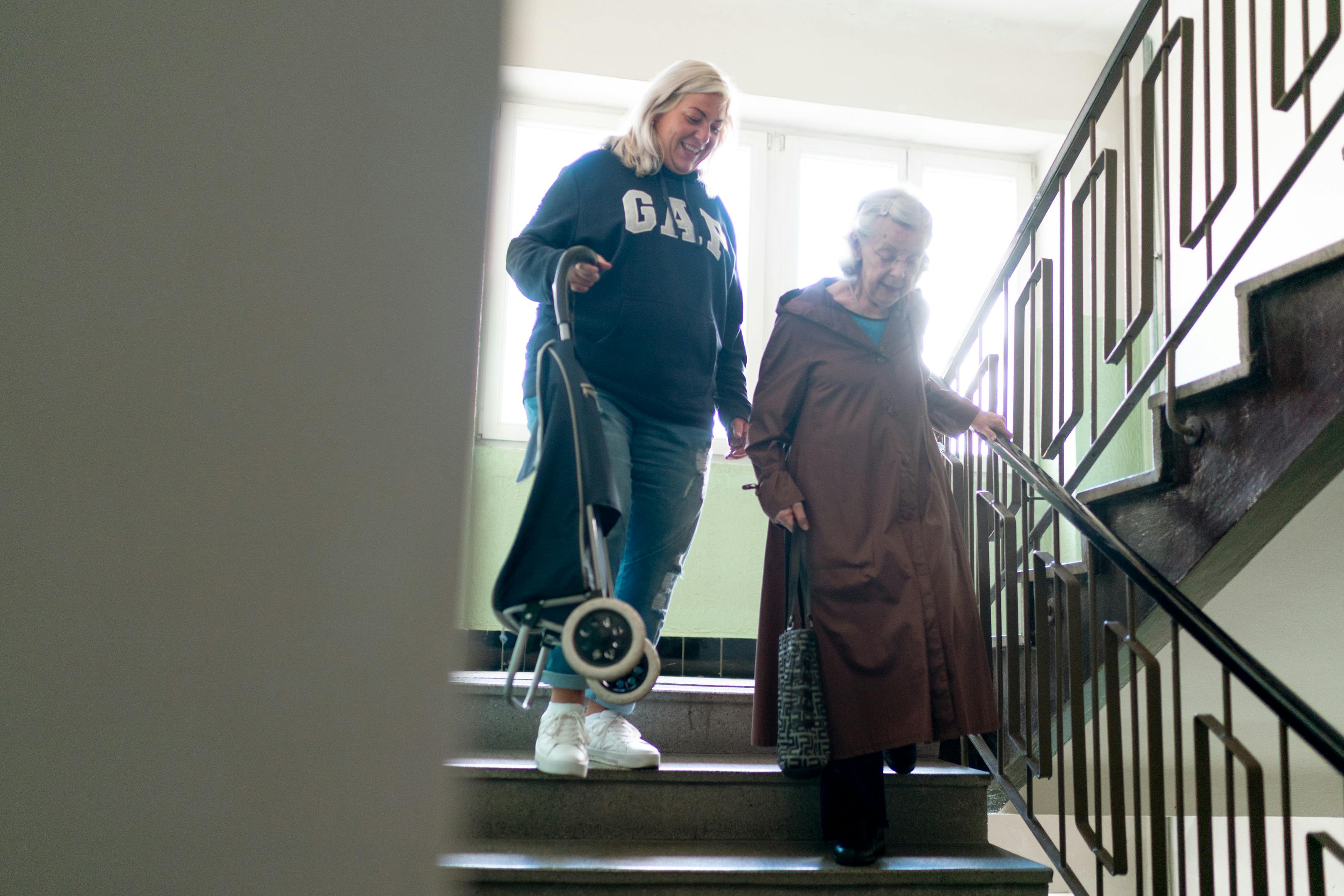
75% of U.S. adults age 50+ want to remain in their current home as they age, per the AARP 2024 Home and Community Preferences Survey. 73% want to stay in their current community. The Census Bureau projects roughly 73 million Americans age 65+ by 2030 — every Baby Boomer will be 65 or older by then. Falls are the leading cause of injury death among adults age 65+; 1 in 4 older adults falls each year, per CDC older-adult falls data.
**Aging-in-place (AIP) home modifications — grab bars, walk-in showers, ramps, smart-home accessibility, fall-prevention lighting — are the natural specialty extension of general handyman work.** Same trip charge, same truck, same daily route — but the work is safety-critical, the pricing is 30-50% above standard handyman labor, and the referral economy (occupational therapists, hospital discharge planners, Area Agencies on Aging) brings clients directly to you instead of you bidding against the lowest local handyman on Google.
This guide is for the handyman who already runs a profitable repair business and wants a defensible specialty. We cover the NAHB CAPS certification (the de-facto credential), the ANSI A117.1-2017 standard for residential accessibility, the funding sources (VA HISA, Medicaid HCBS waivers, OAA Title III) that pay for this work, and the insurance + documentation hygiene that separates the operators who build durable referral books from the ones who get sued. If you're starting from zero, read How to start a handyman business first.
The demographic tailwind — why 2026 is the year
Three independent demographic forces converge in 2026:
- **Boomer wave at peak.** All Baby Boomers (born 1946-1964) are between 62 and 80 in 2026. The 65-74 cohort has the highest median household net worth of any age group per the Federal Reserve Survey of Consumer Finances — they have the cash to spend on home modifications, AND they overwhelmingly want to stay home rather than move to assisted living.
- **Stay-at-home preference is durable.** AARP's 2024 wave (75% of 50+ adults want to age in place) tracked closely to its 2021 wave (77%). This isn't a fad. Every alternative (assisted living, memory care, multigenerational housing) is more expensive, more disruptive, or socially unappealing.
- **Insurance + Medicaid funding broadening.** Medicaid HCBS waivers (Section 1915(c)) increasingly fund "environmental modifications" — grab bars, ramps, widened doorways, roll-in showers — as cheaper alternatives to nursing-home placement. VA HISA grants pay up to $6,800 for service-connected disabled veterans. Many state Area Agencies on Aging fund minor modifications via Older Americans Act Title III dollars.
**Note:** Medicare (Parts A/B) does NOT cover home modifications — it only covers durable medical equipment (DME) like commodes and hospital beds, prescribed by a physician and obtained from a Medicare-enrolled supplier. Grab bars, ramps, structural changes are excluded. The funding flows through Medicaid (state HCBS waivers) and VA, not Medicare.
CAPS — the credential that opens the referral network
The NAHB Certified Aging-in-Place Specialist (CAPS) designation is the de-facto industry credential. Awarded by the National Association of Home Builders in partnership with AARP. Three required courses:
| CAPS I — Marketing and Communicating with the Aging-in-Place Client | 1-day course; ~$425-$525 NAHB member |
| CAPS II — Design Concepts for Livable Homes and Aging in Place | 1-day course; ~$425-$525 NAHB member |
| CAPS III — Business management for the AIP remodeling business | 1-day course; ~$425-$525 NAHB member |
| Three-course package (NAHB member) | ~$1,200-$1,500 |
| Recertification | Every 3 years; 12 CE hours + community service + annual renewal fee |
| Non-member pricing | Higher; check NAHB current rate card |
Active CAPS designation gets you listed in the public NAHB CAPS directory — which is what occupational therapists, hospital discharge planners, geriatric care managers, and Area Agencies on Aging browse when they need a vendor. The cert costs ~$1,500 all-in and pays for itself on the first 1-2 referred jobs. It's the lowest-friction credential-to-referral conversion in the home services industry.
Adjacent NAHB designations worth knowing about:
- **CGR — Certified Graduate Remodeler.** Most directly adjacent to CAPS for handymen scaling into full remodeling. Useful if you plan to take on full-bath remodels (curbless walk-in showers) as primary scope.
- **CGB — Certified Graduate Builder.** New-construction-focused; less relevant unless you're transitioning into a builder role.
- **CGP — Certified Green Professional.** Sustainability/energy-efficient focus; only relevant if your AIP work overlaps with energy retrofit (some Medicaid waivers fund both).
Alternative on the clinical/assessment side: **USC Leonard Davis School of Gerontology — Executive Certificate in Home Modification (ECHM)**. Geared toward OTs, gerontologists, design professionals doing the assessment work. Roughly $695-$895 for the self-paced online program. Combine ECHM + CAPS if you want to position as both an assessor AND an installer; CAPS alone is enough if you're installing to OT-written specs.
State licensing — where AIP work crosses the handyman/contractor line
AIP modifications routinely include plumbing (curbless showers, walk-in tubs), electrical (smart-home circuits, lighting upgrades), and structural framing (ramps, grab-bar blocking) — work that pushes typical handyman jobs OVER state-specific contractor-license thresholds. Headline thresholds in 2026:
| State | Threshold | Authority |
|---|---|---|
| California | $1,000 (per AB 2622, eff. Jan 1 2025) | CSLB |
| Washington | $500 (all contractors register with L&I) | L&I (RCW 18.27) |
| Arizona | $1,000 or any work requiring permit | ROC (A.R.S. §32-1121) |
| Pennsylvania | $5,000/yr aggregate handyman registration | PA Act 132 of 2008 (HIC) |
| North Carolina | $40,000 GC license required above this | NCGS §87-1 |
| Florida | Specialty license required for plumbing/electrical/structural regardless of size | Ch. 489 F.S. |
| Texas | No statewide handyman license; plumbing/electrical state-licensed (TSBPE/TDLR) | TSBPE / TDLR |
| New York City | HIC license required for any home improvement >$200 | NYC DCWP |
Walk-in/curbless shower installs ALWAYS require a licensed plumber (drain relocation, supply tie-in, code-required venting). Smart-home circuits + dedicated lighting almost always require a licensed electrician above the receptacle level. CAPS-certified handymen typically (a) sub plumbing + electrical to licensed specialists, or (b) hold a multi-trade license themselves. The CAPS curriculum doesn't grant trade authority — only state license does. Don't let the CAPS designation lull you into doing licensed-trade scope without the license.
Grab bars — the safety-critical install that defines the trade
Grab bars are the most-installed, highest-volume AIP modification and the single biggest liability surface in the work. A grab bar that pulls out during a fall causes catastrophic injury and creates a direct causal chain to the installer. Get the specs right, document every install, and never install through drywall alone.
**ANSI A117.1-2017 Section 609 residential grab bar specifications** (the de-facto residential standard — ADA technically applies only to public/commercial facilities):
| Mounting height (centerline) | 33-36 inches above finished floor |
| Diameter (circular cross-section) | 1.25" to 2" |
| Clearance from wall | 1.5 inches |
| Structural strength | Must withstand 250 lbf applied in any direction (toilet/grab bar load test) |
**Anchoring is non-negotiable.** Drywall alone fails well below the 250 lbf requirement — grab bars MUST anchor into wood/metal studs, plywood blocking, or engineered hollow-wall anchors specifically rated for grab-bar loads. Three engineered anchors that meet the 250 lbf spec when installed per manufacturer guidance:
- **WingIts Master Anchor** (Solid Mount + Reinforcer) — rated for grab bar use 250+ lb in 5/8" drywall.
- **Toggler Snaptoggle BB (1/4-20)** — 265-300 lb pull-out in 1/2" drywall depending on substrate.
- **Moen SecureMount Anchors** — proprietary system for Moen-brand grab bars; matches their warranty.
Per CAPS-curriculum best practice and Medicaid waiver/VA HISA reimbursement requirements: photograph each install (before, during showing anchor/blocking, after with measuring tape visible), record on the invoice the manufacturer + model + load rating + anchor model + substrate + install height + date, and have the client sign-off on placement. This isn't paranoid paperwork — it's how you defend a future negligence claim, and many E&O carriers REQUIRE it.
Ramps + walk-in showers — the larger-ticket scopes
Wheelchair / fall-prevention ramps
**ADA slope max: 1:12** (1" rise per 12" run). Residential AIP commonly uses 1:12 to 1:16 for greater safety margin. Landings minimum 60" × 60" at top, bottom, and any direction change. Maximum run between landings: 30 ft. Source: 2010 ADA Standards for Accessible Design, Section 405 (referenced for residential by ANSI A117.1).
| Material | Per-linear-ft | Notes |
|---|---|---|
| Pressure-treated wood | $100-$200 | Permanent; cheapest if you frame it |
| Aluminum modular (EZ-Access PATHWAY, National Ramp) | $150-$300 | Faster install; removable + resaleable |
| Poured concrete | $200-$400 | Permanent; requires sub or concrete experience |
Practical sizing math:
- **6" porch rise** = 6 ft of ramp (no intermediate landing required since rise <30")
- **30" porch rise** = 30 ft of ramp + 5×5 ft landings at top, bottom, and at every 30" of cumulative rise
- **Tip:** Aluminum modular (EZ-Access et al.) is the right answer for 80%+ of residential AIP ramps — $200/linear ft installed beats wood on labor + permits, the rental/resell market is real, and the manufacturer warranty handles structural defects so you're not on the hook for a 10-year wood ramp that fails.
Curbless / walk-in showers
Typical scope: demo existing tub or shower; reframe + recess subfloor for zero-threshold drainage; install pre-sloped pan or build mortar bed; waterproof membrane (Schluter Kerdi or Laticrete Hydro Ban or USG Durock); linear or center drain; tile.
| Material cost (parts only, mid-range) | $1,500-$3,500 |
| Labor scope (single-bath, no major structural) | 5-10 working days |
| Customer all-in price (residential AIP retrofit) | $8,000-$18,000 typical; varies by tile + fixture + region |
**Permitting + plumbing license needed in most jurisdictions** for the drain relocation + supply tie-in. Sub the plumbing rough to a licensed plumber if you don't hold the trade license; most CAPS handymen do.
Smart-home accessibility + stair lifts
AIP-relevant smart home is NOT generic home automation — it's about cognitive simplicity, low-vision interfaces, hearing-impaired notification redundancy, and integration with caregivers/family. Useful AIP scope:
- **Voice-controlled lighting** (Lutron Caséta + Alexa/Google, Philips Hue) — eliminates fumbling for switches at 3 AM bathroom trips
- **Smart locks with remote unlock** (August, Schlage Encode, Yale Assure) — caregiver/EMS access without lockbox key risk
- **Video doorbells** (Ring, Nest Doorbell) — answer the door without rushing to the front
- **Motion sensors with phone alerts** — bathroom-no-motion-in-30-min alerts to a caregiver's phone (early-warning fall detection)
- **Fall detection wearables** (Apple Watch Series 4+, Google Pixel Watch, Life Alert, Medical Guardian, Bay Alarm Medical). Apple's automatic fall detection calls emergency services and notifies contacts.
**Stair lifts:** straight-rail residential install runs $3,000-$5,500 installed (lift + rail + labor); curved-rail (custom-bent) often $10,000-$20,000+. Major brands: Bruno Elan/Elite, Acorn 130/180, Stannah Siena/Solus, Harmar Pinnacle, Handicare 1100/2000. **Most manufacturers (Bruno, Stannah, Handicare) restrict warranty installs to authorized dealers with installer training.** Most CAPS handymen sub stair lifts to authorized dealers and bill for the prep work (electrical outlet at top of stairs, bullnose modifications, end-of-life removal) plus the referral commission. Don't self-install a Bruno without dealer status — you'll void the warranty AND own all the liability.
Funding sources — who actually pays for this work
AIP customers come with funding mechanisms most general handymen don't know about. Knowing the funding sources is how you close jobs the homeowner alone couldn't afford.
| VA HISA (Form 10-0103) | Up to $6,800 service-connected; up to $2,000 non-service-connected; lifetime grant |
| VA SAH / SHA grants (severely disabled) | FY2024: SAH up to ~$117,014; SHA up to ~$23,444 (annually adjusted) |
| Medicaid HCBS waivers (Section 1915(c)) | State-specific; covers grab bars, ramps, doorway widening, roll-in showers |
| Older Americans Act Title III-D / III-E (via Area Agencies on Aging) | Typically $150-$500 per household for minor mods; varies by AAA |
| State property tax exemption (MD, NJ, IL, others) | Excludes AIP value from reassessment for some years |
| Private long-term care insurance | Some policies cover home modifications when alternative to nursing-home placement |
| Self-pay (high-net-worth 65-74 cohort) | Federal Reserve SCF 2022: peak median net worth in this cohort |
Eldercare Locator finds your local Area Agency on Aging. Most AAAs maintain preferred-vendor lists for minor home modifications funded under OAA Title III. Application is straightforward — typically a contractor packet (insurance proof, license verification, references). For Medicaid HCBS work, your state Medicaid office has a separate enrollment process. These vendor lists are a steady-state referral source — once you're on them, you're on them, and the AAA/Medicaid case worker calls YOU when a client needs work.
Insurance — the E&O rider most general handymen skip
Standard handyman general liability ($1M/$2M) covers bodily injury + property damage from negligent work. AIP work introduces two exposures most GL policies handle poorly:
- **"Professional services" exclusion.** Some GL policies exclude claims arising from "professional advice" or "design work." If you specify a grab bar location and someone falls because the bar wasn't placed where the OT recommended, the GL carrier may decline coverage citing professional services.
- **"Your work" exclusion.** Common in CGL policies — the policy doesn't cover repair/replacement of YOUR installed item itself when it fails, only the consequential damage. A grab bar that pulls out is excluded; the broken hip from the fall may be covered.
- **Solution: Professional Liability / Errors & Omissions (E&O) rider.** $500K-$1M E&O is the standard add-on for AIP-certified work. Premium typically $400-$1,500/yr depending on revenue + claim history.
**Liability lever:** when an OT writes the home assessment and you install to spec, primary liability shifts toward the OT. When you both assess AND install, your E&O exposure rises materially. Many CAPS handymen position as install-only and decline assessment work — let the OT (with their professional credentialing + malpractice coverage) own the spec, and you own the install. Document the OT's spec on every job.
Run AIP referrals + repeat customers in one place
Plyrium tracks the entire AIP customer relationship: the referring OT, the funding source (VA HISA, Medicaid waiver, AAA), the photo + spec documentation per install, and the recurring follow-up checks ("Mrs. Henderson — 6 months since the grab bar install, would you like a fall-prevention safety check?"). The same software your handyman business already uses — same trip charge, same truck, durable referral economics layered in.
See pricingFirst 90 days — building the referral book
- **Days 0-30 — Take CAPS I, II, III.** All three courses + active designation runs ~$1,500 for NAHB members. Pass the courses; submit the designation application; get listed in the public NAHB CAPS directory.
- **Days 30-60 — Build the referral relationships.** Identify 5 occupational therapists in your service area (search AOTA practitioner directory, local hospital networks, geriatric care managers via Aging Life Care Association). Offer free 30-minute lunch-and-learns on "what handyman scope I cover, what I sub, what I price." Apply to your local Area Agency on Aging vendor list (Eldercare Locator). Apply to your state Medicaid HCBS waiver vendor list.
- **Days 60-90 — Land the first 3 jobs.** First grab-bar install on a CAPS-listed referral validates the credential. First ramp install validates the larger-ticket scope. First Medicaid- or VA HISA-funded job validates the funding-source workflow (paperwork, reimbursement timing, vendor compliance). Photograph everything; document everything; bill the source promptly. Three completed referrals build the testimonial + case-study library that fuels referral #4 onward.
Next step
Aging-in-place is the highest-margin, longest-tail specialty available to a handyman in 2026. The demographic tailwind (75% of 50+ adults wanting to age in place; 73 million 65+ Americans by 2030) is durable. The certification path (CAPS, ~$1,500, 3 days of coursework) is fast. The funding sources (VA HISA, Medicaid HCBS, AAA) bring funded clients to you. The pricing premium (30-50% over standard handyman labor, widely cited in trade press) compounds with referral lifetime value.
What separates the handymen who build $300K-$600K AIP-specialty businesses from the ones who get the cert and never close a job is the operational discipline: documenting every install, billing the funding source on time, maintaining the OT relationships, never installing licensed-trade scope without the trade license. Run that on Plyrium and the referral side stays disciplined while you take care of the work.
Run your handyman business with Plyrium
CRM, scheduling, quotes, invoices, recurring service contracts, and an AI receptionist — built for service-trade contractors. 14-day free trial. No setup fee. No long-term contract.
Start free trialRelated guides
How to Start a Handyman Business from Scratch (2026 Guide)
Honest playbook for starting a handyman business in 2026. US industry $365.4B (DECLINING 0.8% YoY) but 549,688 businesses + median home age 41-43 years drives sustained demand. Owner-operators billing $80-$100/hr; small teams $120-$150/hr. The single biggest legal risk: working over your state's unlicensed-work threshold (CA $1,000 as of Jan 1, 2025; WA $500; NC $40,000; FL no statewide for minor repair).
How to Write a Service Contract That Holds Up (2026 Guide)
The honest playbook for service-trade contractors: state-required clauses (CA / NY / MA / TX / FL), the FTC Cooling-Off Rule that catches kitchen-table sales, deposit caps that vary by state, change-order discipline, and the dispute-resolution clauses courts will actually enforce.
How to Price Service-Trade Work Without Underbidding (2026 Guide)
The honest pricing playbook for service contractors — your real hourly rate floor (it's higher than you think), the 3 pricing models compared, the 16% who use 3-tier pricing and out-earn the rest, and the math on why charging $25/hr is losing $10/hr.